


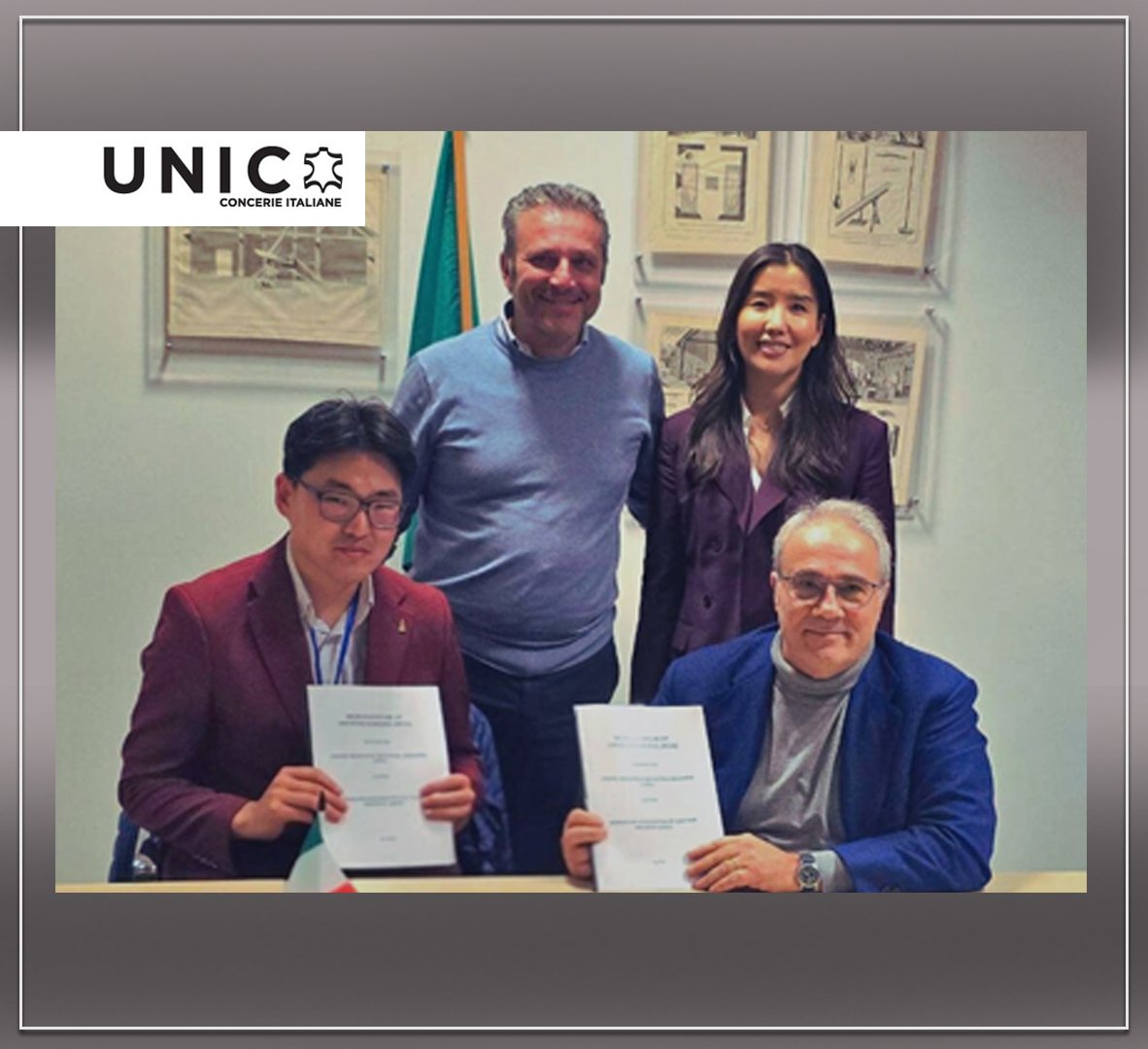
Italy and Mongolia have taken a significant step toward deepening cooperation in the leather sector with a new partnership agreement signed at the Po.Te.Co Leather Technology Center in Santa Croce sull’Arno. The protocol was formally signed by Fabrizio Nuti, President of UNIC – Concerie Italiane, and Ariunbold Davaasuren, President of the Mongolian Association of Leather Industry (MALI).
The ceremony brought together numerous representatives from the tanning and leather-fashion supply chains of both countries, underlining the shared commitment to innovation, sustainability and long-term sectoral development.
Two-Year Renewable Protocol

The agreement, valid for two years with the possibility of renewal, focuses on key areas including training, research and development, international certification standards, traceability, and environmental responsibility.
The objective is to support the professional growth of workers, specialists and technicians while aligning both countries with globally recognized quality and sustainability frameworks.
Joint Fairs, Workshops and B2B Cooperation
The protocol also promotes participation in leather-related fairs, workshops and events held in both countries. These exchanges aim to foster continuous dialogue, share technological know-how and create new business opportunities by strengthening B2B cooperation.
UNIC President Nuti: “International collaboration is essential to face global market challenges”
Fabrizio Nuti emphasized the strategic value of such partnerships:
“We closely value international cooperation tools among companies. They are essential for addressing the challenges of an increasingly complex global market. This protocol will enable firms to access new knowledge, technologies and markets, fostering innovation and sustainable growth.”
Nuti added that cooperation pathways can help companies share risks and resources, increasing flexibility in a rapidly changing market landscape.
A New Era for Italian–Mongolian Leather Relations
This agreement marks a new chapter for the leather sectors of both countries, laying the foundation for enhanced innovation, sustainability-driven practices and a stronger global presence.