


The trade agreement between the European Union and the Mercosur countries (Brazil, Argentina, Uruguay and Paraguay) has reached a crucial stage, gaining the necessary majority to move forward toward signature. Industry representatives have welcomed this progress, underlining its strategic importance for strengthening the global competitiveness of European manufacturing.
The EU–Mercosur deal is expected to significantly enhance the international reach of Europe’s production system by expanding and diversifying export markets. At the same time, it is designed to foster stronger industrial cooperation with some of Latin America’s most dynamic emerging economies, creating a more resilient and diversified global positioning for European companies.
For businesses supplying machinery, technologies and solutions to the footwear, leather goods and tanning sectors, the agreement represents far more than a trade facilitation tool. It opens the door to new opportunities for growth, innovation and long-term industrial presence in a region where demand for modern production technologies is rising rapidly. In a global environment marked by intense geopolitical competition, strengthening Europe’s industrial footprint in Latin America is seen as a clear strategic advantage.


Sector representatives describe the agreement as a long-term development choice that can reinforce both Europe and Italy, enhance industrial value creation and create favorable conditions for sustainable growth. Increased exports, joint ventures and deeper supply-chain partnerships are expected to follow as the agreement takes effect.
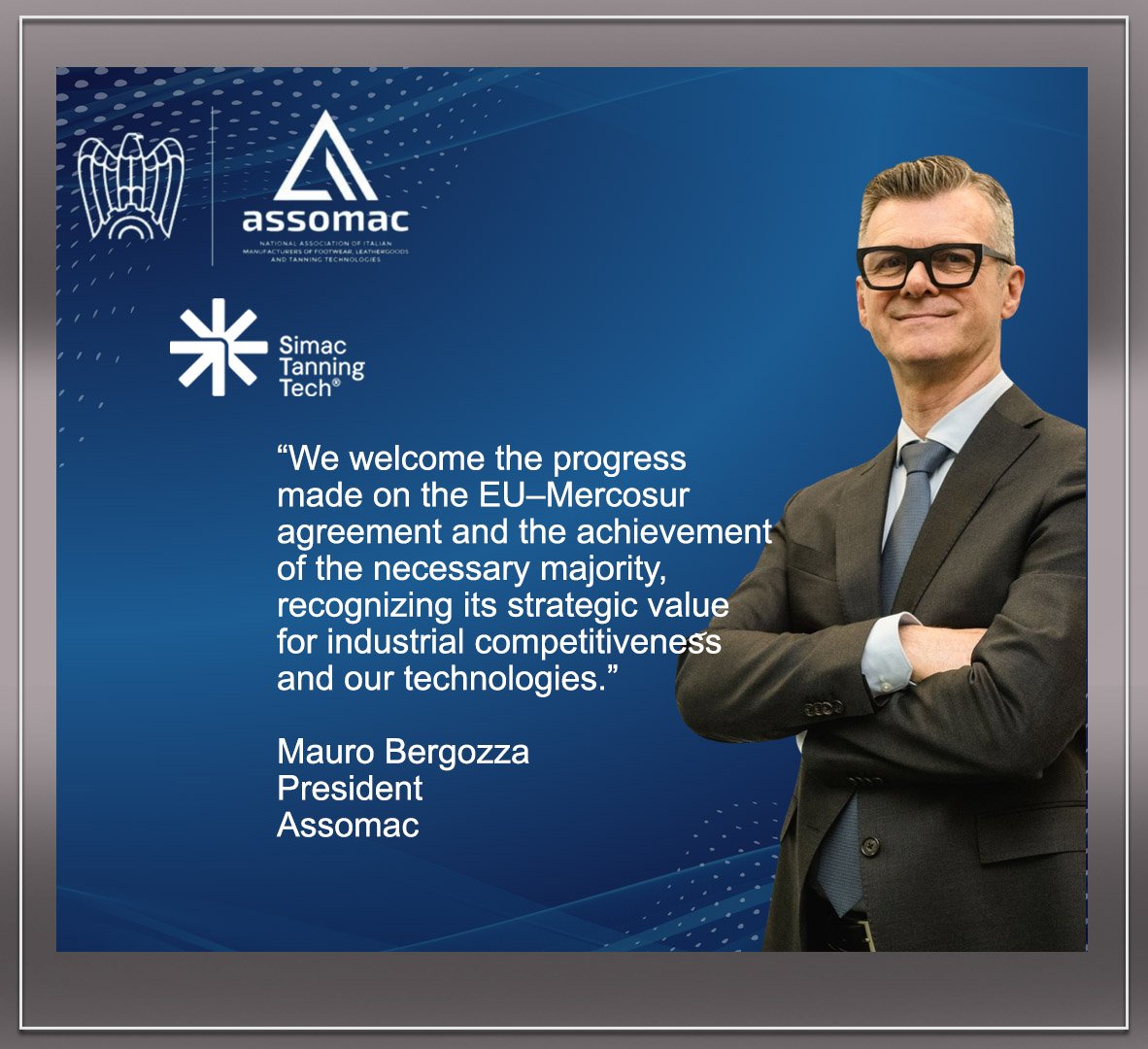
Assomac President Mauro Bergozza: “We welcome the progress made on the EU–Mercosur agreement and the achievement of the necessary majority, recognizing its strategic value for industrial competitiveness and our technologies.”
This topic will also take center stage at the next edition of Simac Tanning Tech, scheduled to take place at Fiera Milano Rho from 15 to 17 September. The exhibition will provide a key platform for discussing international markets, industrial value chains and the future outlook of the sector in the context of the new EU–Mercosur framework.