


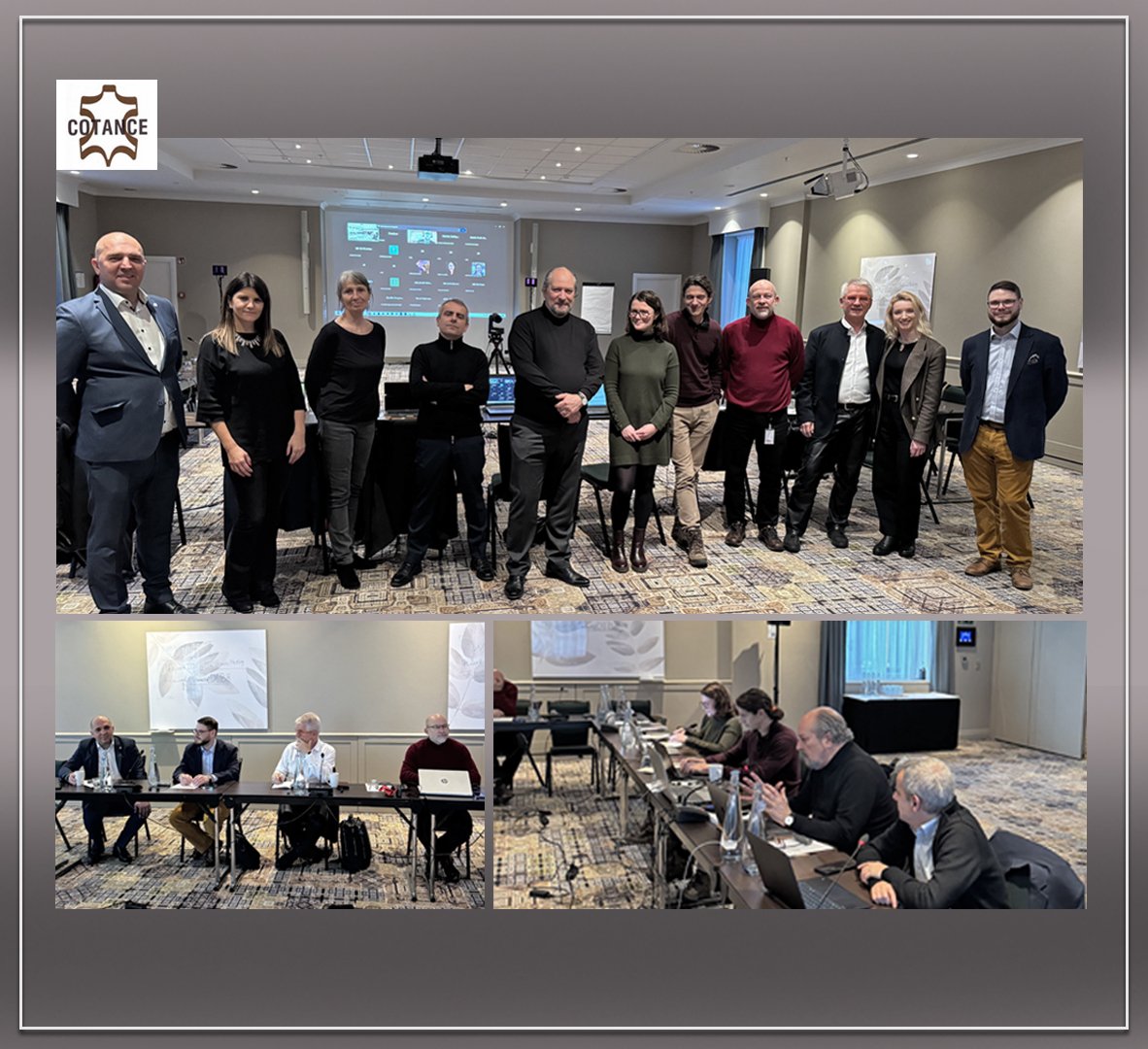
At a critical moment for Europe’s industrial base, COTANCE and industriAll Europe convened in Brussels together with the European Commission for the Plenary Meeting of the Sectoral Social Dialogue Committee “Tanning & Leather”. During the meeting, the social partners assessed the challenges faced in 2025 and officially adopted the Social Dialogue Work Programme 2026–2030 along with the Action Plan for 2026.
The discussions highlighted growing concerns about Europe’s industrial competitiveness. According to industriAll Europe, only one out of 18 key EU industrial sectors currently remains competitive, underlining the urgent need for investment, strategic coordination and a rebalancing of EU industrial policy. As a core pillar of the EU Textiles Ecosystem, the leather sector is directly affected by these pressures.
COTANCE Secretary General Gustavo González-Quijano stressed the strategic importance of the industry, noting that the European leather sector comprises around 1,500 companies, provides 30,000 direct jobs and plays a unique role in the circular bioeconomy. He underlined the need for the sector to be fully recognised, consulted and supported within EU policymaking.


Key policy exchanges with DG GROW and DG EMPL focused on forthcoming and existing EU legislation, including the Textile Labelling Regulation, Ecodesign and the Digital Product Passport, the EU Bioeconomy Strategy, the Circular Economy Act and the EUDR. Social partners jointly emphasised the importance of traceability systems that are realistic, fair and aligned across the entire value chain.
The newly adopted 2026–2030 roadmap is structured around three pillars — People, Planet and Prosperity — and commits the sector to strengthening skills and working conditions, advancing environmental performance and traceability based on scientific evidence, and reinforcing innovation, resilience and global competitiveness.
industriAll Europe General Secretary Judith Kirton-Darling underlined that protecting quality jobs must remain a political priority, stressing that strong social dialogue and coherent EU action are essential to secure a just transition for workers and the industry alike.