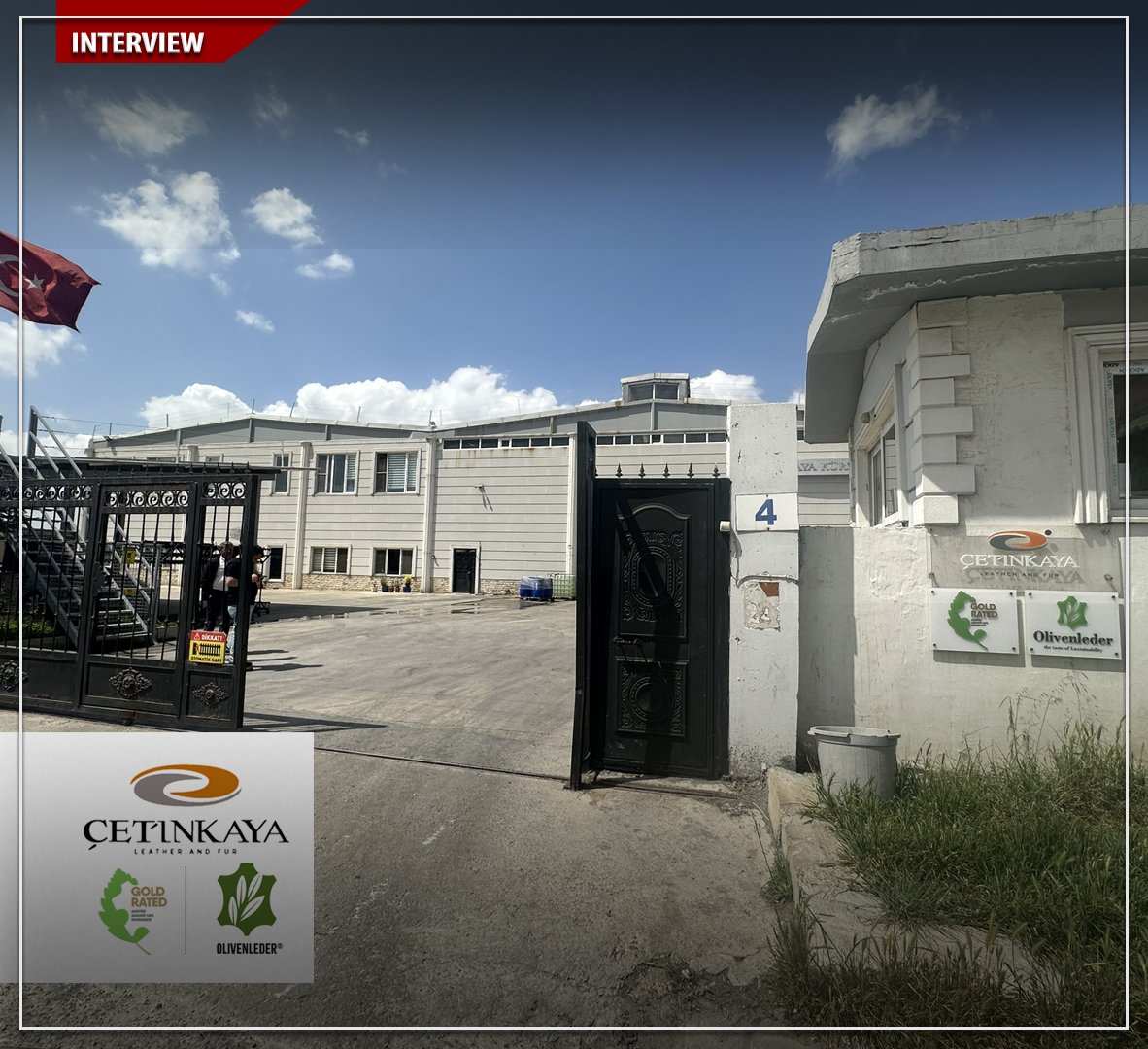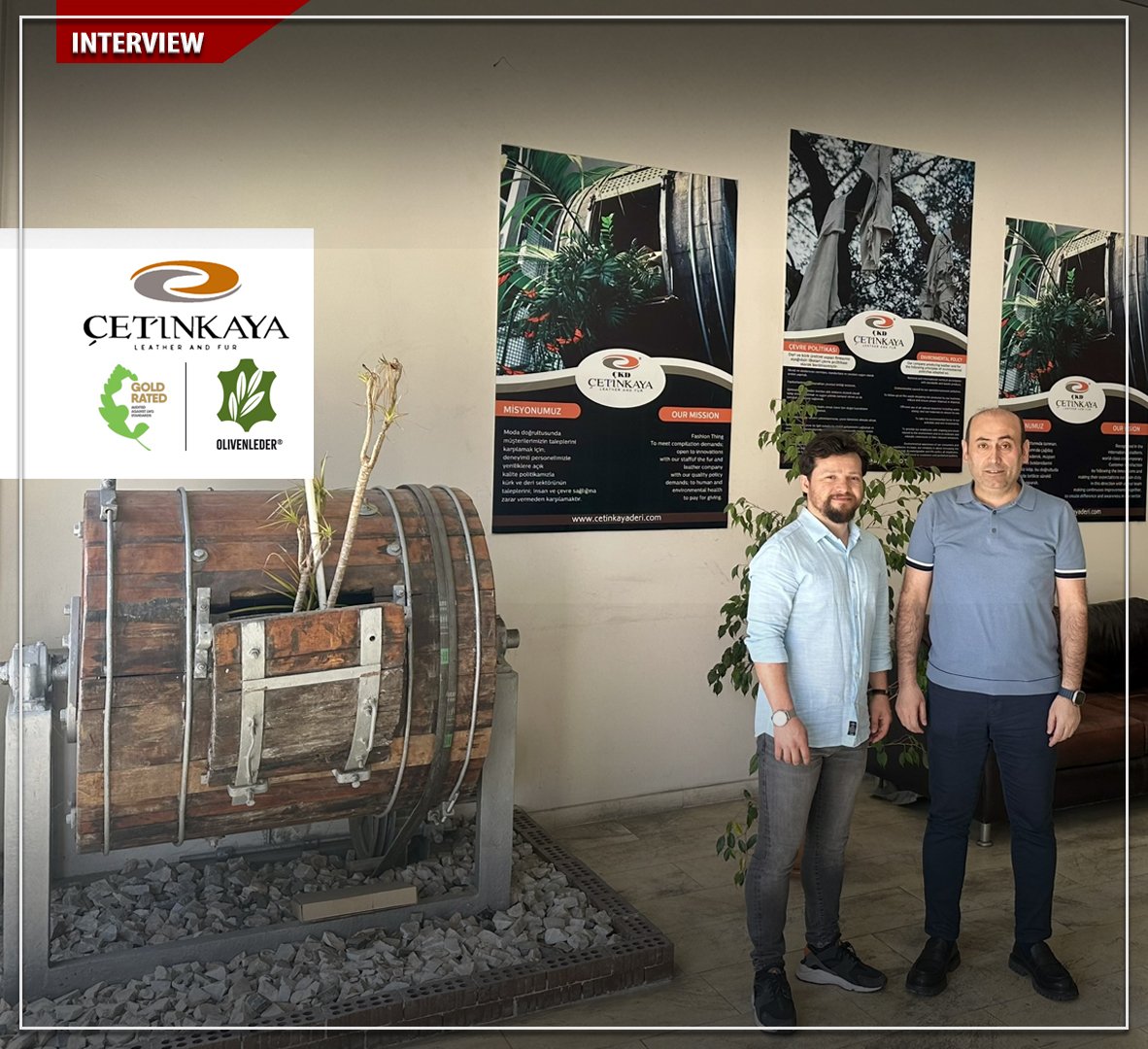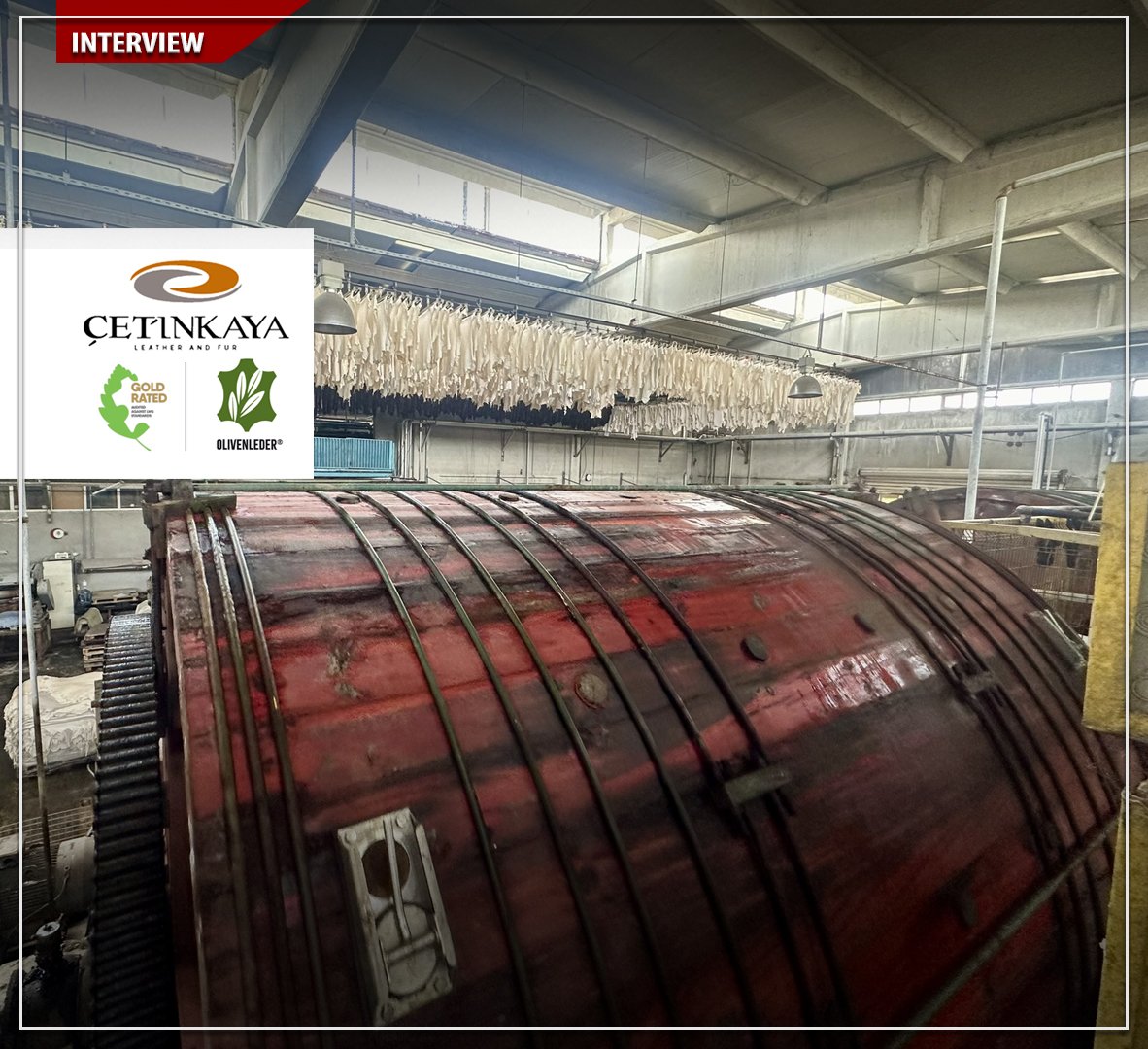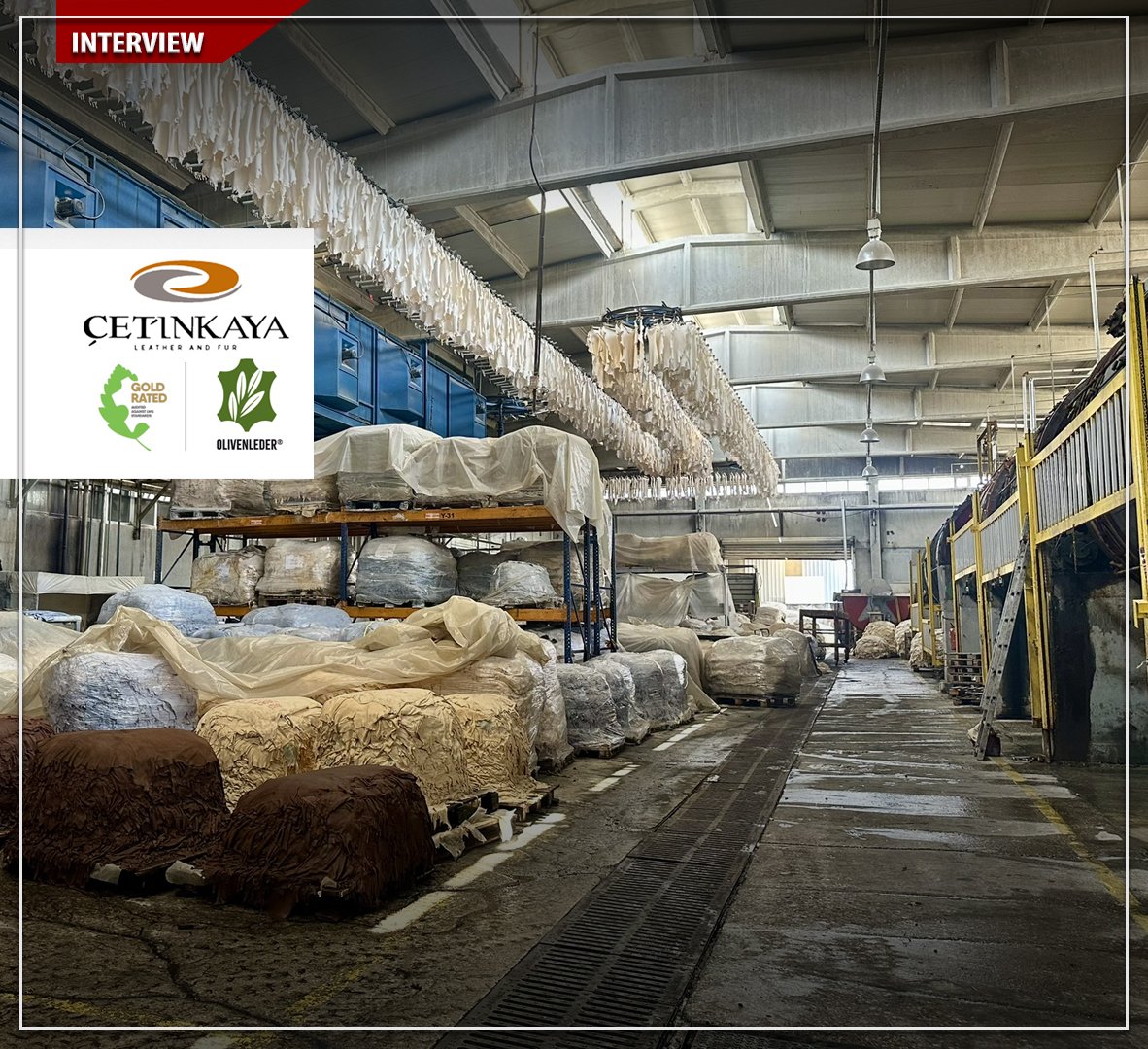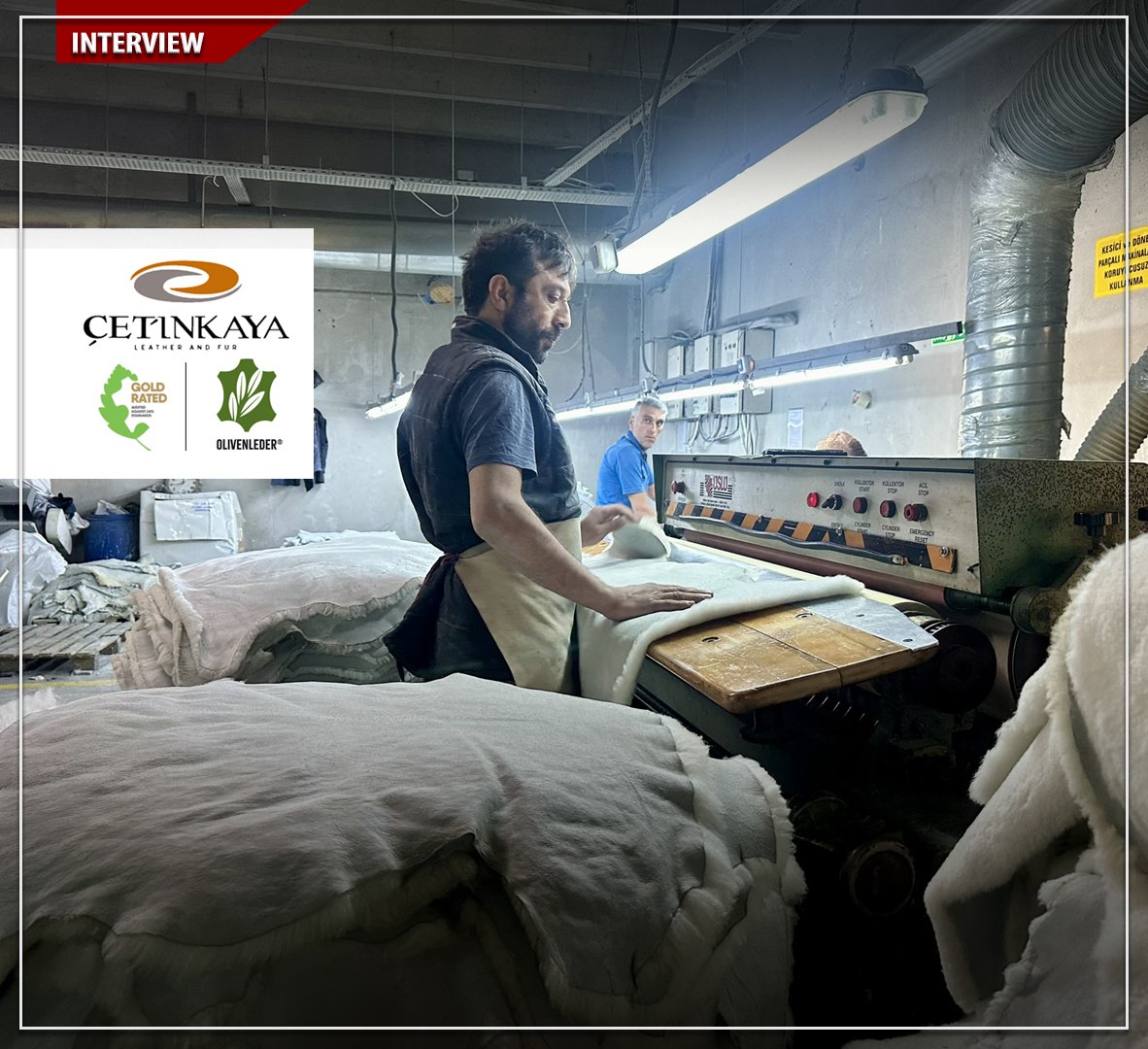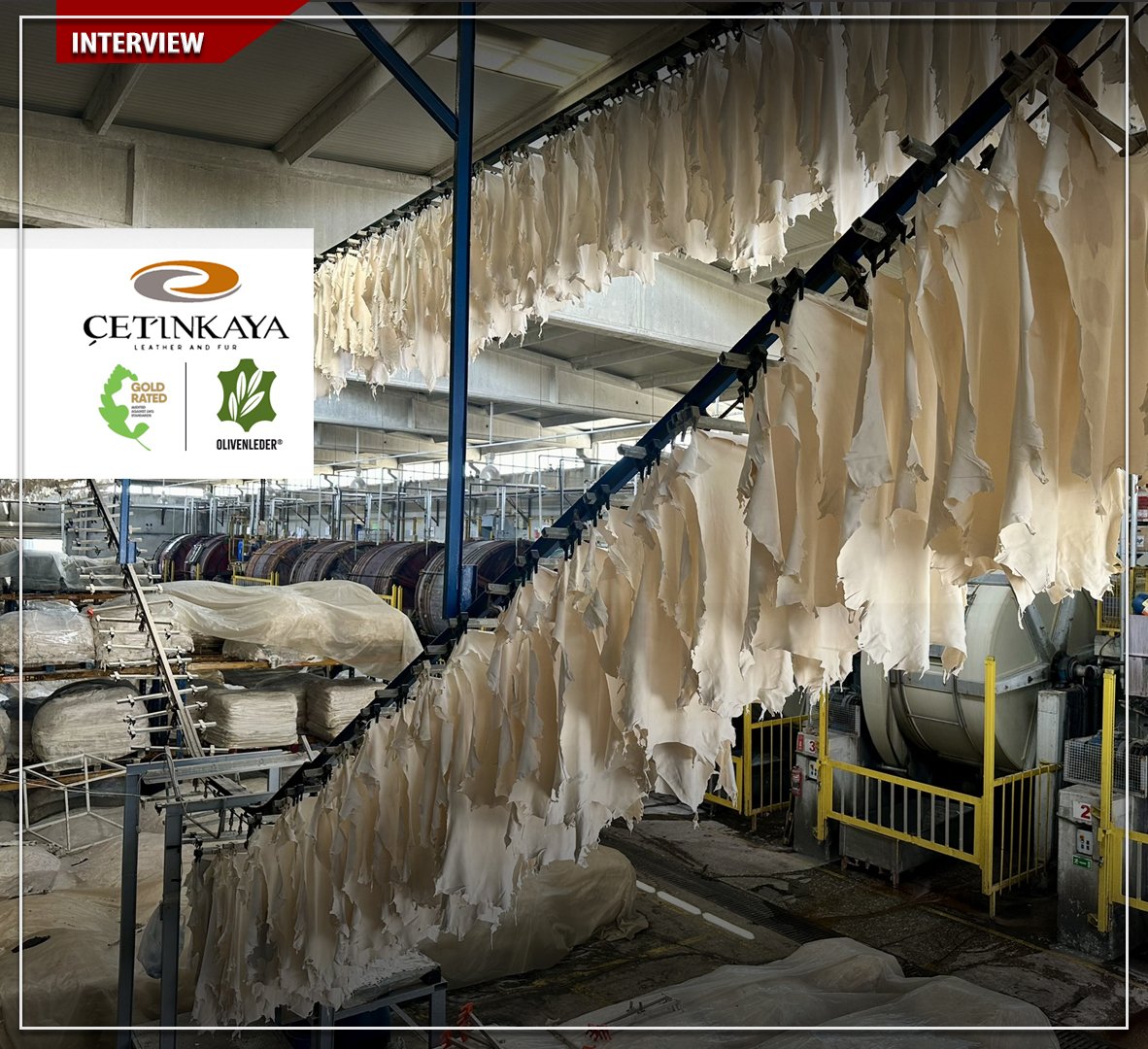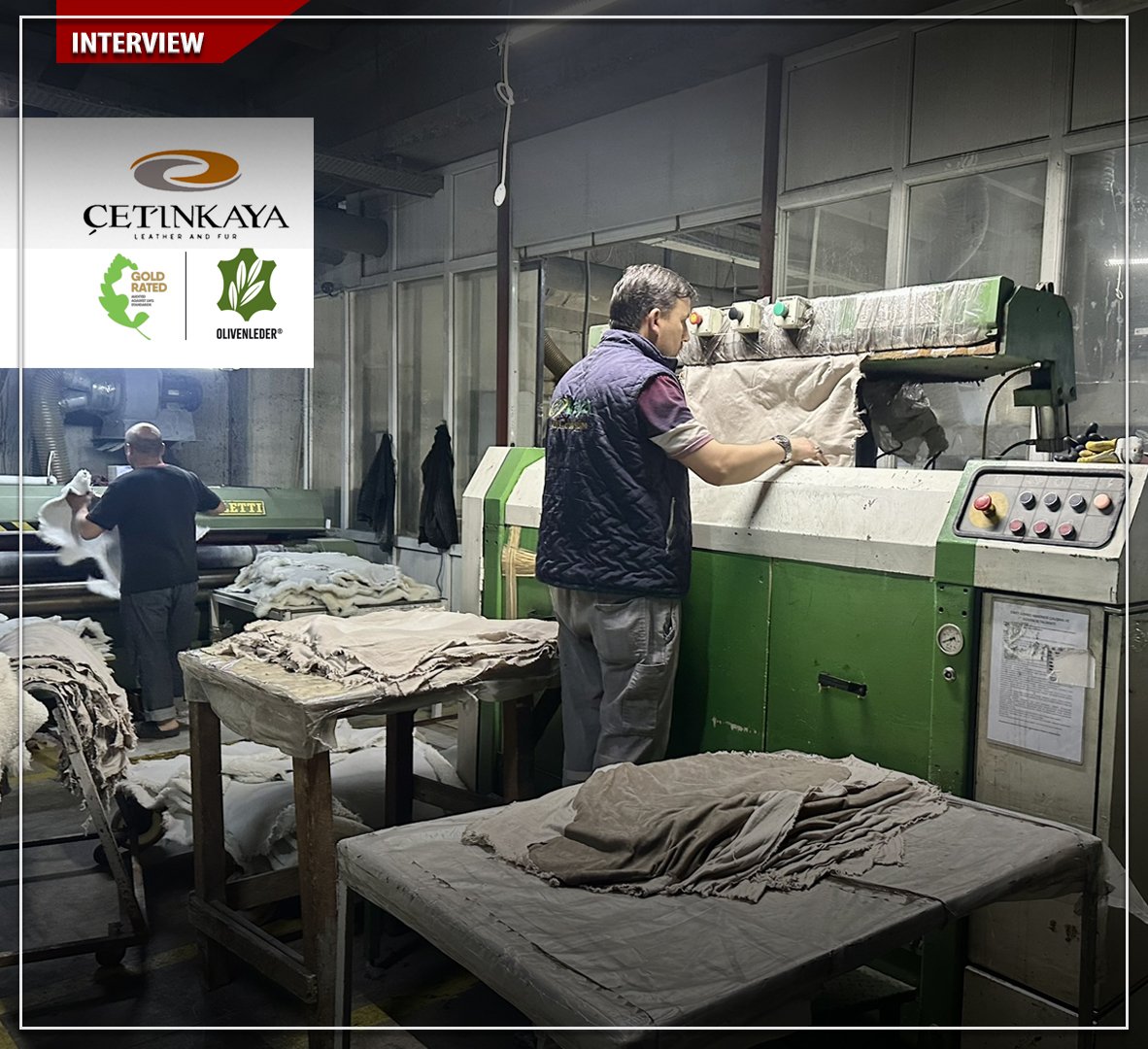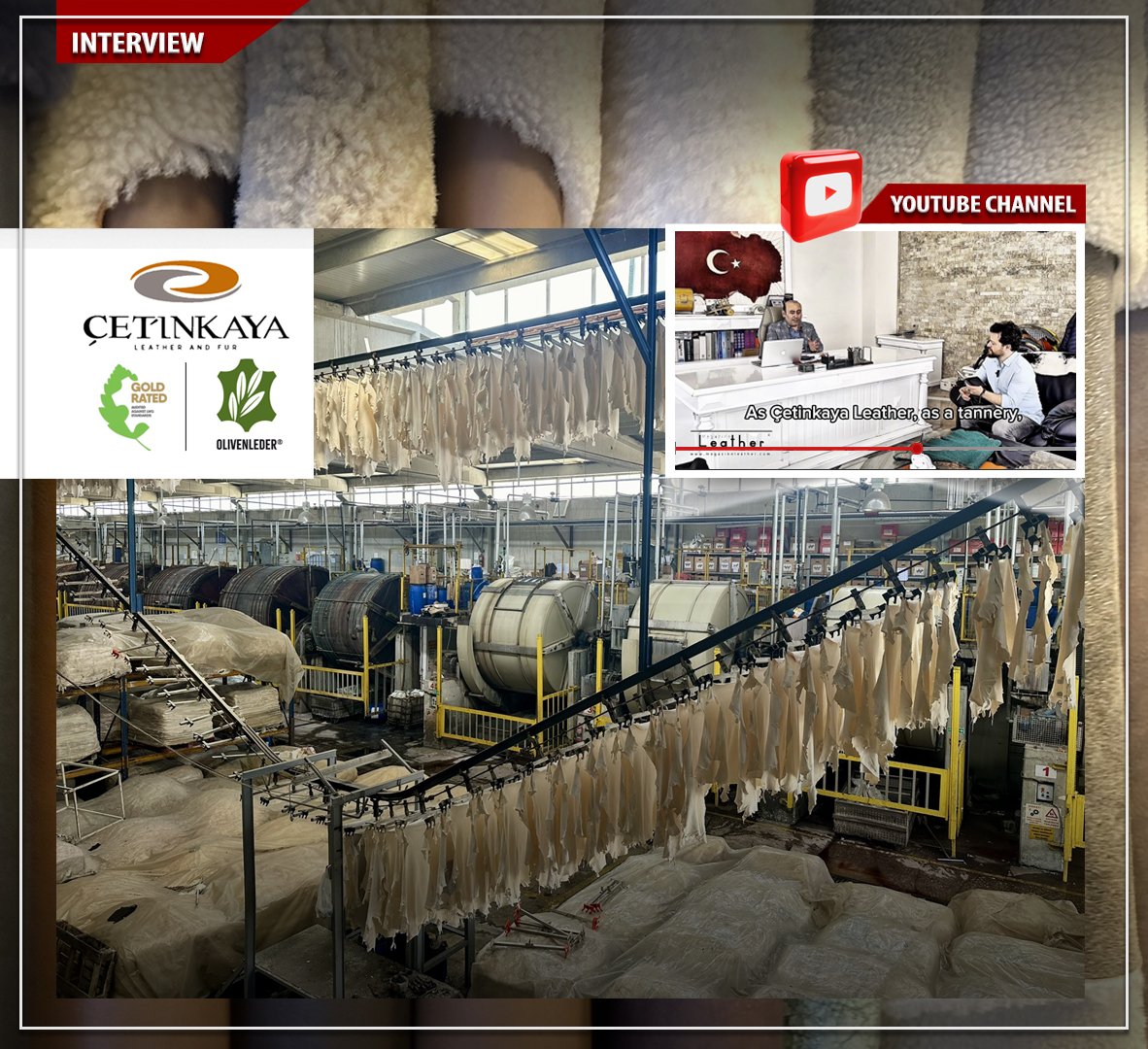



Hello, as Magazine Leather Publishing, this is our interview conducted with Metin Çetinkaya, the company owner and CEO, at the Çetinkaya Leather Tannery factories in Uşak Organized Industrial Zone.
Mr. Metin, first of all, we would like to get to know you.
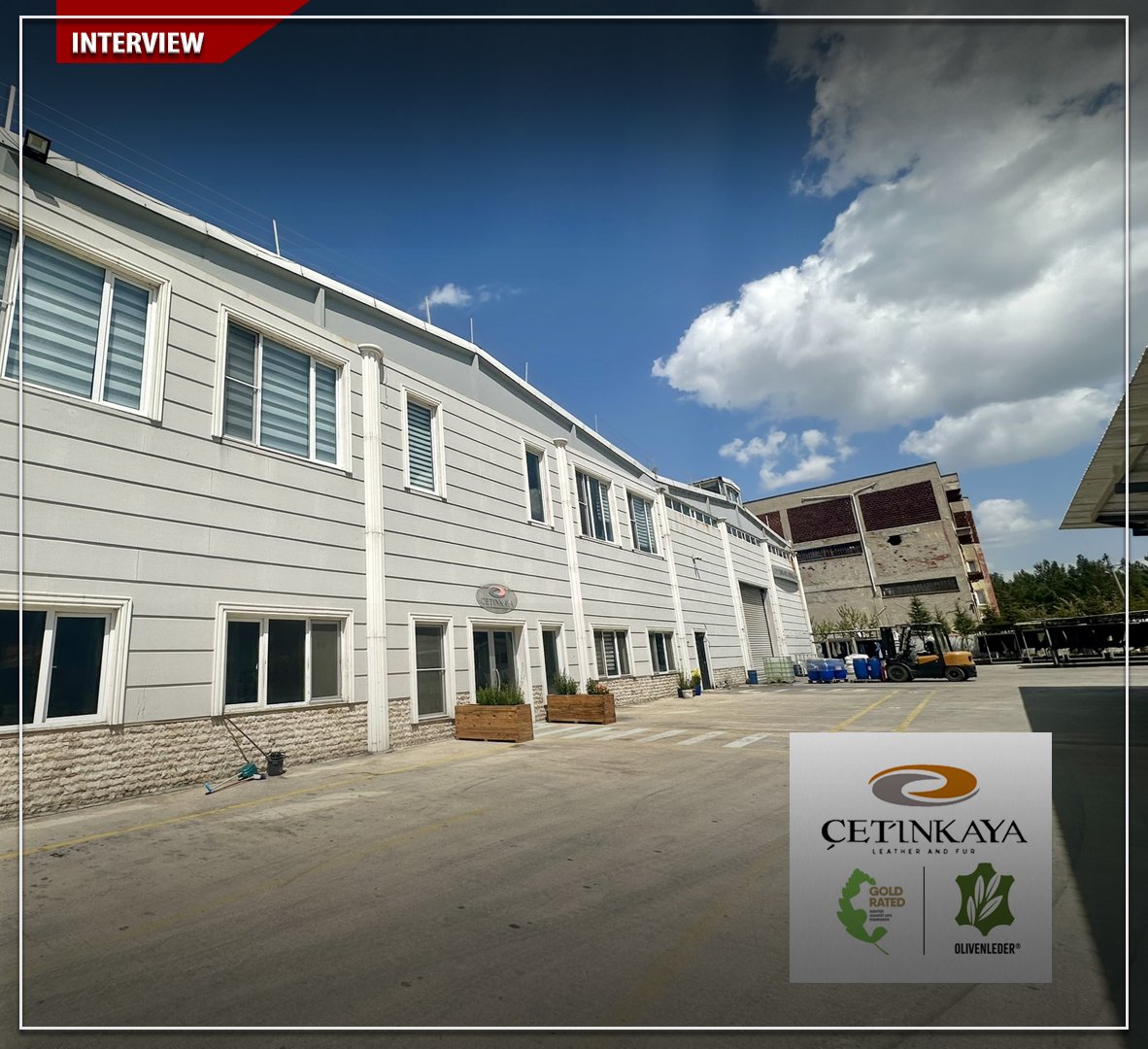
Hello, I am Metin Çetinkaya, the owner and also the partner of Çetinkaya Leather. We are two brothers. I am married and a father of three children. Our company was established in 1990. Previously, we were a family company. Our head office is in Istanbul Zeytinburnu, and our factory is located here in Uşak. In 2016, we made an investment by benefiting from the incentive program. Our factory used to be in Istanbul Tuzla. We are engaged in the leather sector. We have been in this profession since our childhood.
Can you tell us about the Çetinkaya family?
We established Çetinkaya Leather in 1990. We went through a corporatization process. We produce garment leather, footwear leather, bag leather and glove leather. For approximately thirty-five years, we have been active in this sector. As a family business, my brother and I founded the company together. We have now included our own children in the company as well. We have handed over the sales and marketing department to the younger generation. We ourselves now follow production, organization and similar tasks. We produce garment, footwear and bag leather.
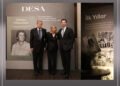
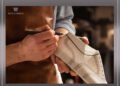
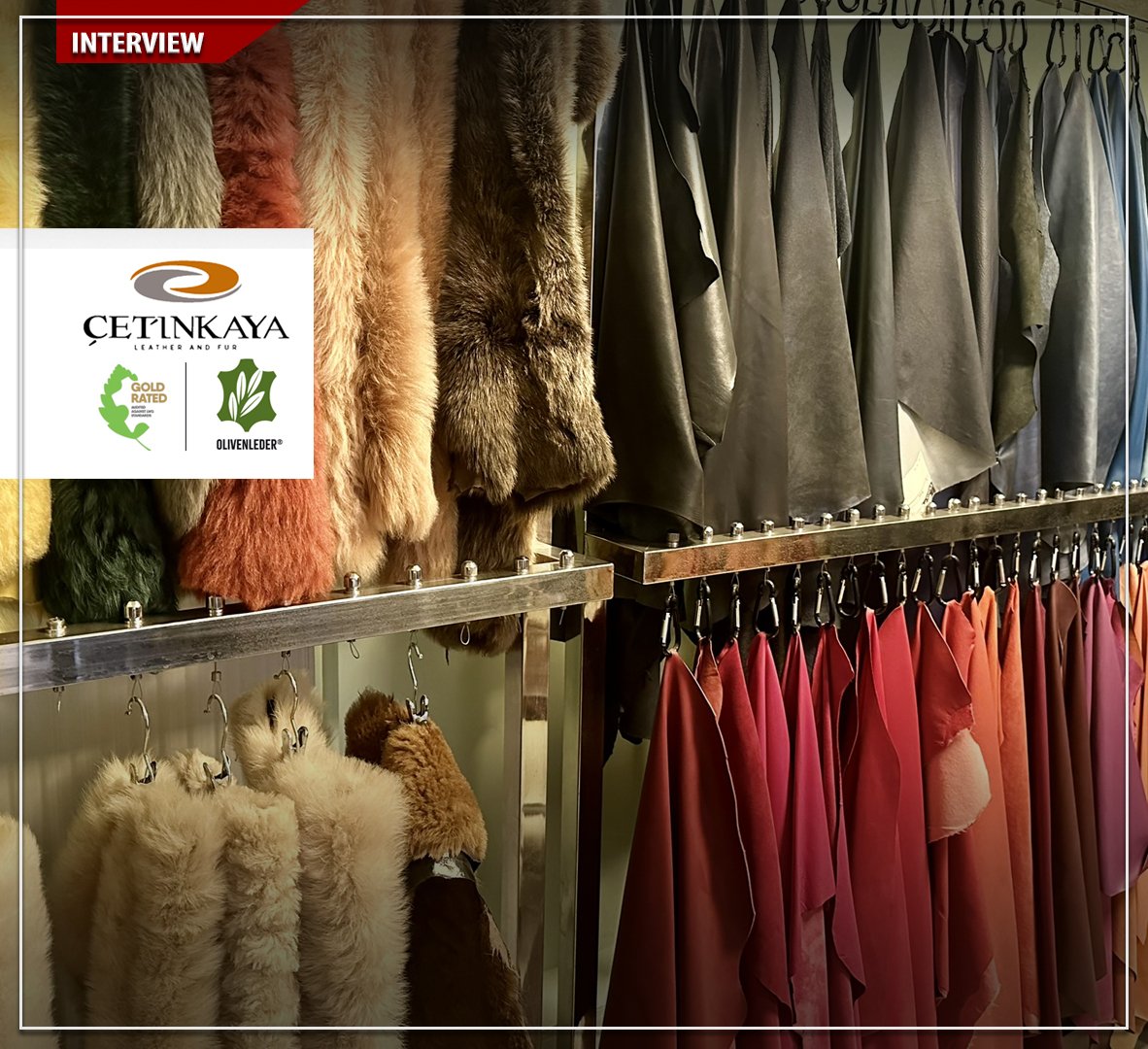
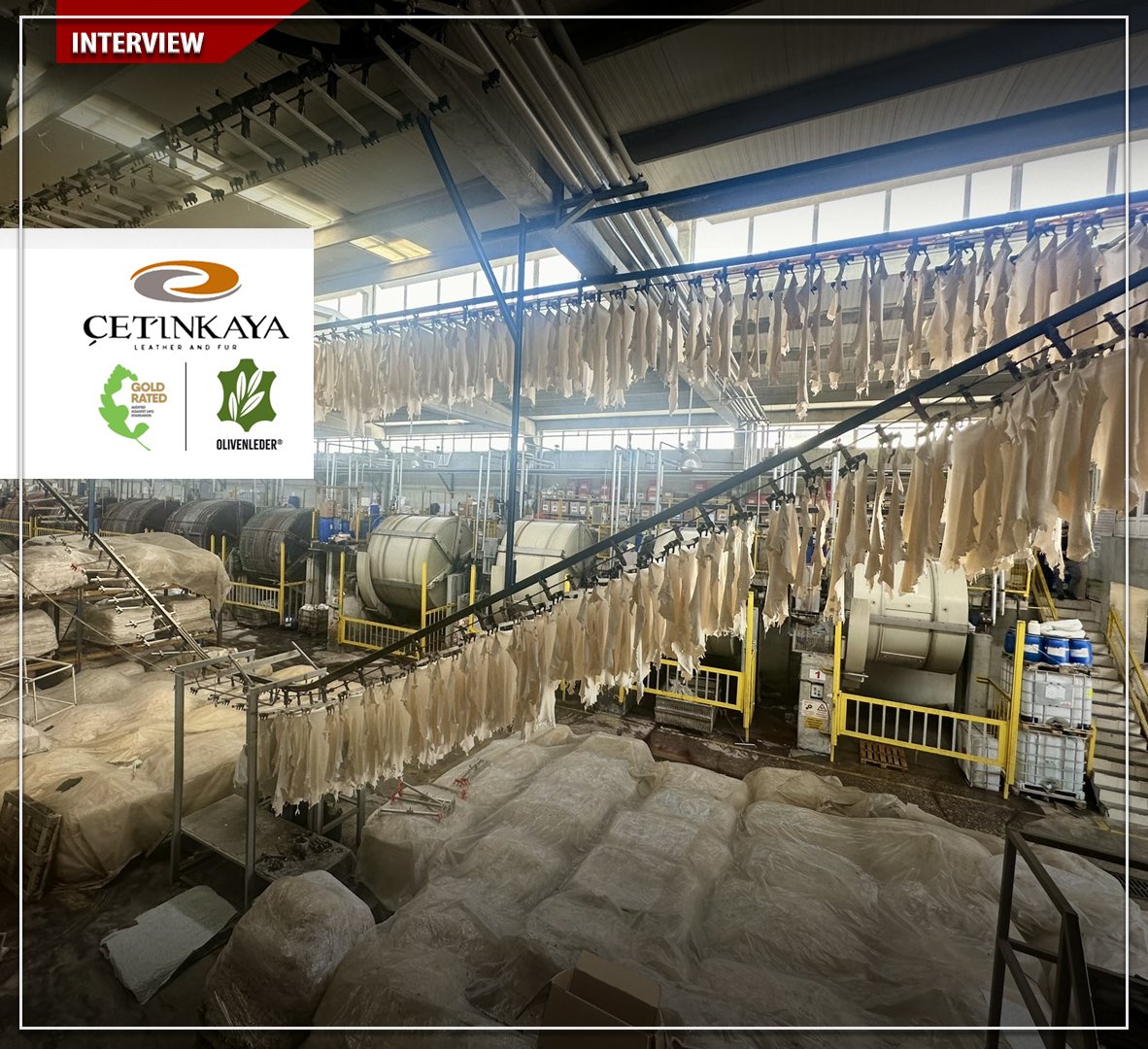
We have been in the market for nearly thirty-five years. We first started as traders. In 2005, we transitioned into the tanning division. Until then, we continued with buying and selling operations; after the 2000s, we switched to the tannery sector. We started with napa production, and later we also began fur manufacturing. After establishing the factory in Uşak in 2016, we gathered fur, napa, everything under a single roof.
Sustainability is currently on the global agenda for textiles and leather. What would you like to say in this regard according to the ESPR law issued by the European Parliament?
Yes, of course, regarding that, we all inevitably have to adapt to the whole world. We also made investments and took various steps accordingly. For example, Olivenleder — we perform leather tanning using olive leaves. We collaborated with the German company Olivenleder. Besides that, we produce metal-free leathers. We have leather production that is metal-free, healthier and more environmentally friendly. We carry out activities in this regard. Sustainability means less polluting the environment, lower water consumption, energy efficiency — we have made significant investments related to all of these. As Çetinkaya Leather, as a tannery, we have already established a new-system factory. In 2016, we built a modern tannery.
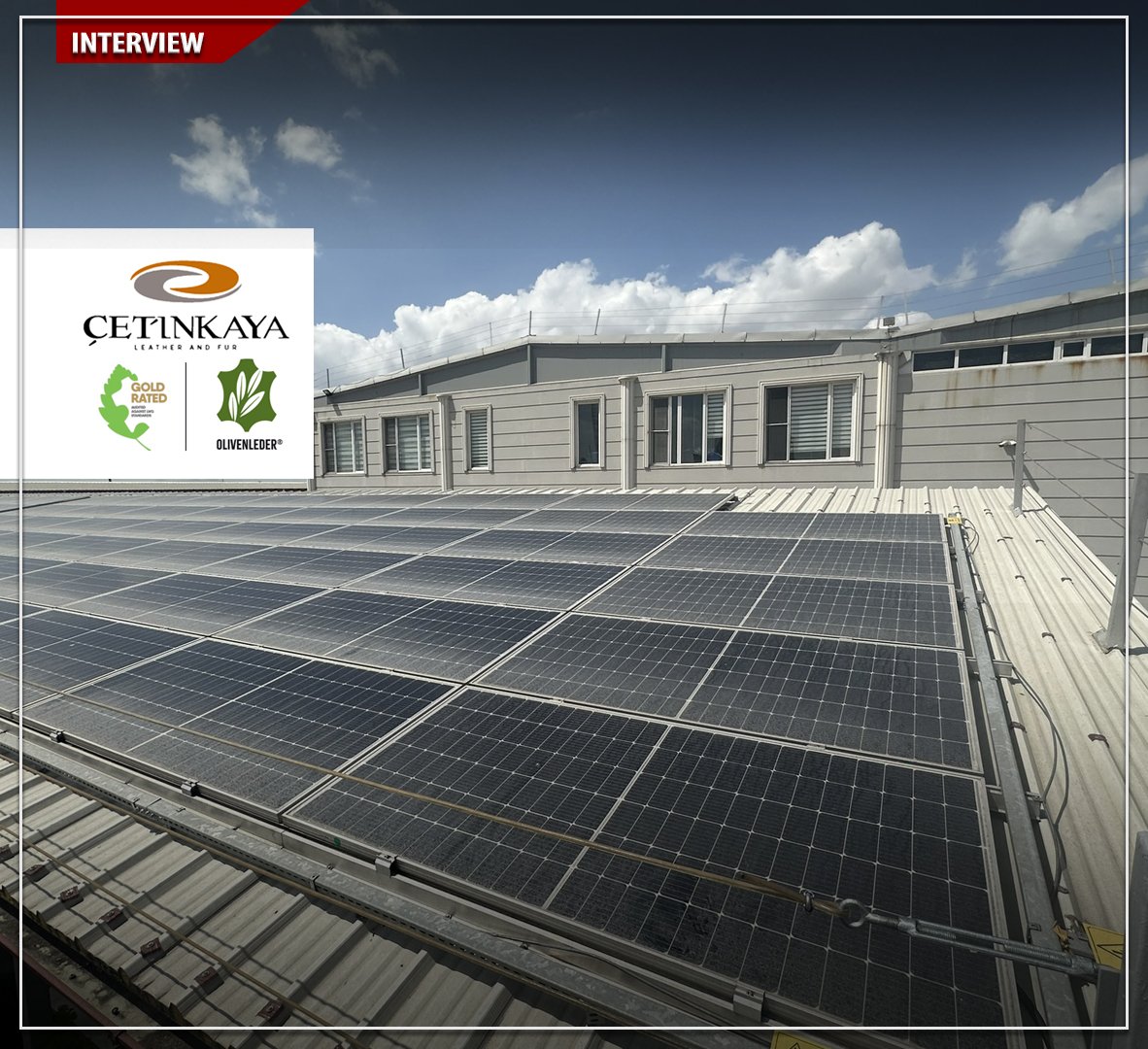
We made machinery investments, and environmental investments. We made investments related to water. In addition, we have energy projects. Right now, there is a large solar panel project on the roof and it is operational. Currently, we produce seventy percent of our electricity ourselves.
You produce all this tannery’s energy…
For now, we cover seventy percent of it through solar panels; the remaining thirty percent we purchase from the Organized Industrial Zone.
You have a cooperation with the Olivenleder company. What would you like to say about the activities arising from this partnership?
Olivenleder is a very beautiful project. We cooperated with the German company Olivenleder approximately 5 years ago. Because sustainability has become very important and has come to the forefront worldwide. Everything — environment, air, waste — is now being calculated. It has become extremely important. What we call Olivenleder is a natural chemical tannin produced entirely from olive leaf extract. These are completely vegetable tannins. We perform leather tanning with these. That is, we tan lamb leather with vegetable tannins to produce garment, footwear and bag leathers, and we even recently developed glove leather. We produce glove leather as well and sell it to the world market. And of course this has brought us something significant.
Several very important global brands contacted us because it is an environmentally friendly product. Innovative — therefore we now have serious trade relations with these companies. When you produce something different, something new that no one else has, you naturally become an innovative company and your brand value increases. Then high-quality brands contact you. They want to use your products. Currently, we are working with six or seven major brands. After the Olivenleder project began, these brands reached out to us, and we now have ongoing trade with them. This has been good for us both in general and financially, because it is better.
Today, the most difficult issue is marketing and sales. Especially foreign markets are very important. This has contributed to us significantly.
Do you have any preliminary work on sustainability?
Yes, of course. Besides Olivenleder, we have a few more projects. For example, what we call recycled leather— we produce leather again from leather waste. Shaving waste, buffing waste — we process all of these back into leather. This way, we pollute the environment less and at the same time produce a different type of leather. Additionally, we have another new project. Actually, it is not new — it is a two-year project. We are currently producing leather related to this. We named it ourselves.
We call it E-tanning — completely organic leather. Again, the materials we use are entirely organic vegetable tannins. Because it is organic, the waste that comes out — such as shavings, dust from trimming — can be used as fertilizer in gardens. We are currently working on this, and hopefully within one or two years we will obtain concrete results regarding converting this waste into fertilizer.
We hope your success continues. This is truly very important. At the same time, you are making a very significant investment both in agriculture and the environment.
Well, what would you like to say about the Turkish domestic market in terms of the leather sector?
Regarding the markets, of course dynamics are changing worldwide. Serious economic difficulties are emerging. Naturally, Türkiye is also affected by these conditions. Due to the economic circumstances, the markets have contracted somewhat. Therefore, we set all our goals primarily on export.
Export is essential — indispensable. We make efforts in this direction. Customer visits, international fairs — as a company, we have been attending global fairs for many years. We hope things will improve, because we work fully toward improvement. But there is a contraction worldwide; we are all aware of this. Türkiye is also affected, but hopefully it will improve. My thoughts are positive.
Tanneries are recycling centers in terms of scientific value for the leather sector; therefore, they are extremely important.
Do you participate in international fairs?
Yes, we do. For example, in the past we attended fairs in Russia and Ukraine; later Hong Kong, Shanghai, fairs in China, Far East fairs. For approximately ten years, we have been participating entirely in European and American fairs. That is, the Paris Première Vision fair, the Lineapelle fair in Italy, and the Lineapelle fairs in America — six fairs in total, both Summer and Winter editions. We attend all of them and we see the results. Of course, this gives us the opportunity to meet new customers and brands. Today, you must take action — customers no longer come to your doorstep. Because the world has become more difficult. As the Çetinkaya family, as a team, we follow these fairs. We make an effort to attend all of them.
Do you have any technological investments or work regarding artificial intelligence for your tannery?
Yes, we do. We are already a member of the Leather Working Group (LWG), and we have a Gold certificate, which is the highest segment for a tannery.
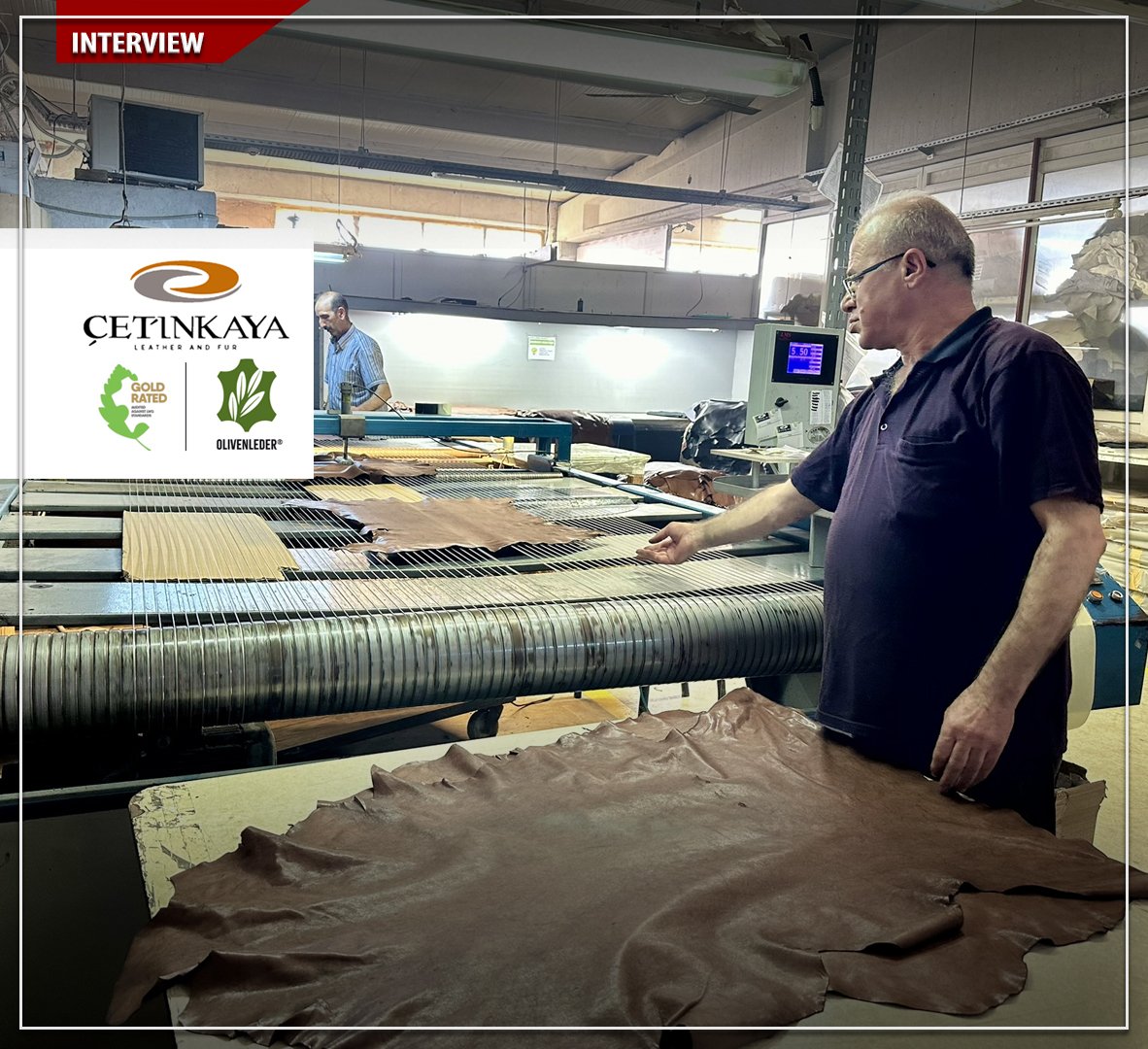
Therefore, we have indispensable programs. We have invested in automation programs. From the entry of raw hides to the final output, when we upload the process program, we can directly see the process stages and also the chemical costs, and all costs up to the final stage. As part of the tracking system, we can follow everything from which slaughterhouse the hide originated to which company it is sold to.
A very special project in terms of traceability…
Yes… One of the most essential and indispensable elements for tanneries…
Absolutely…
Do you have any cooperation with universities or associations? Any ongoing work?
We have an agreement with Uşak University related to the fashion and arts department. In 2022, we signed a protocol with the fashion design department. We try to support university students regarding the factory and products. Sometimes, when necessary, we also try to benefit from the university. We have a collaboration with Uşak University.
Well, Mr. Metin, what would you like to say about qualified personnel?
Our biggest problem right now is qualified personnel — this is currently Türkiye’s biggest issue. Vocational areas must urgently be opened. Vocational schools should be opened. And particularly regarding the leather sector, new personnel are not being trained. It is really difficult. There are some graduates from Ege University Leather Engineering department; we try to benefit from them. Since we work with major brands, we definitely need leather engineers. In this regard, we try to get support from Ege University.
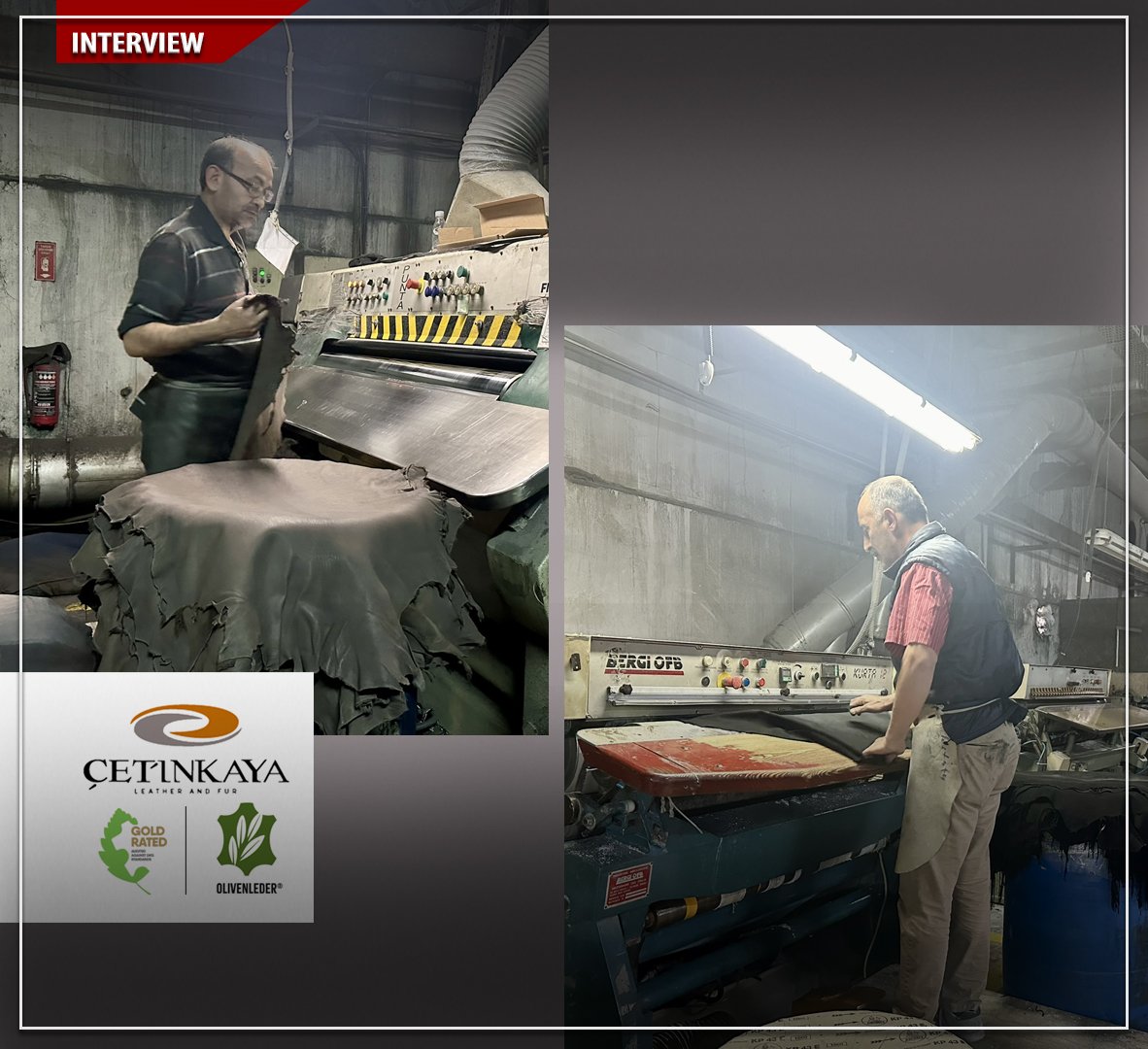
We employ newly graduated students within our structure and make investments for the future. But apart from that, we have very serious problems with qualified workers. My suggestion is that our government should invest heavily in this issue. For example, machinists, shavers, buffers — educational classes could be opened in certain regions where tanneries are located to train qualified personnel. I believe investments should be made. Textile also needs the same — every field should have its own vocational schools. To train qualified personnel — this is currently the biggest issue we face.
IDMIB (Istanbul Leather and Leather Products Exporters’ Association) has designated schools, but incentives are very important — the most important thing is to provide incentives.
What would you like to say to the new generation about these incentives?
Yes, let me say the following: young people mostly want to work at desk jobs. But if everyone sits behind a desk, who is going to do the actual production? Young people should focus less on easy jobs and more on craftsmanship, even if it is difficult.
If things continue like this, in ten years we will no longer be able to produce. Everyone wants to work behind a computer. Too many universities have opened in our country; with this increase, I believe the quality has somewhat decreased. Young people should be directed more toward vocational schools — this is very important.
So you say it should even be implemented down to secondary education?
Yes, it should already start from middle school. There is a saying, “The tree bends when it is young.” After the age of twenty, how much can you teach someone? But if students aged 13–14 receive vocational education, they learn the craft. We need to focus on this.
Absolutely…
Thank you very, very much for the information you provided. I wish you continued success. The work you are doing for sustainability is wonderful. I hope it spreads across Türkiye and to all companies. It would benefit both our environment and our nature.
This is our shared wish…
Thank you very much.
Thank you, I wish you good broadcasts.