


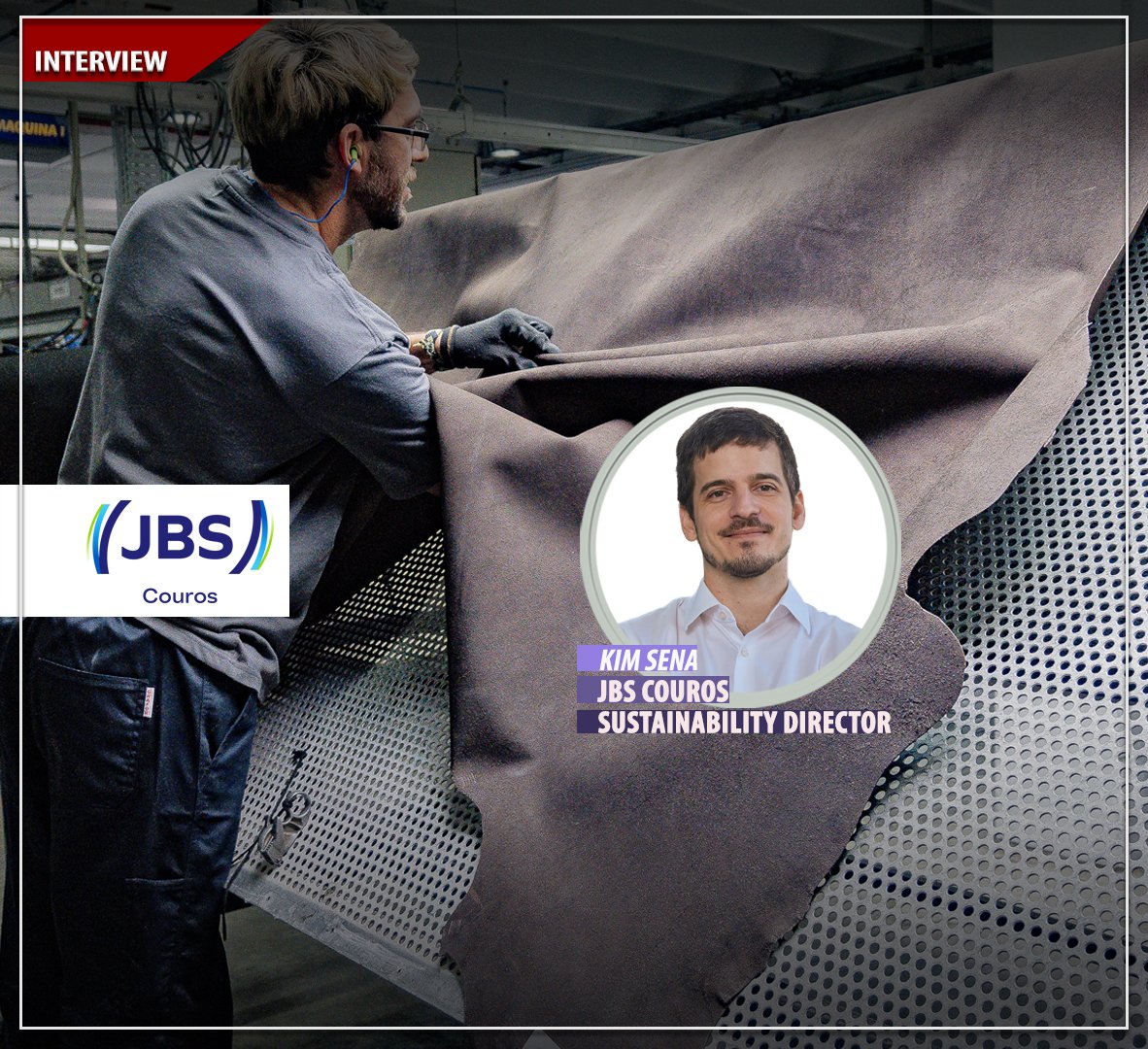
Mr. Kim Sena, first of all, could you introduce yourself and the JBS Couros family?
I currently serve as Sustainability Director at JBS Couros, focusing on developing deep and practical strategies to continuously reduce the environmental impact of the leather we produce. I have a technical background in Chemical Engineering and Sustainability and have been working in the leather sector for about ten years.
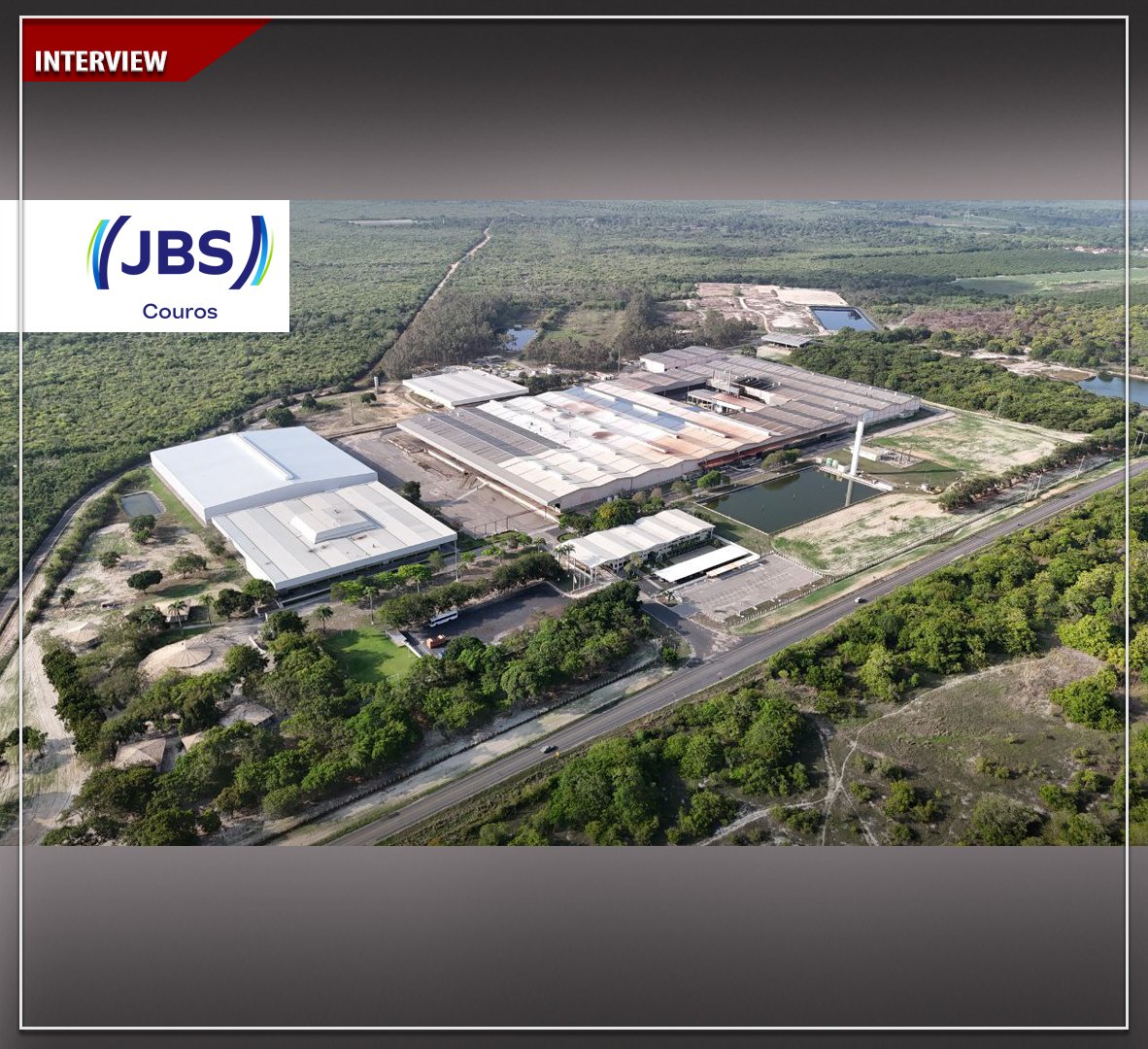
JBS Couros is a global leather processing company supplying high-quality leather solutions to industries such as automotive, furniture, footwear and fashion. As part of JBS S.A., we operate within a vertically integrated structure, with strong oversight of the entire leather production chain, from raw hide sourcing to finished leather.


This structure is particularly strategic for sustainability innovation. With collagen, peptides, tallow, biodiesel and other related industries within the broader JBS group, we are able to optimize supply chains beyond the limits of the tannery, strengthening traceability, quality control and environmental responsibility.
Could you tell us about the services JBS Couros provides to the leather industry?
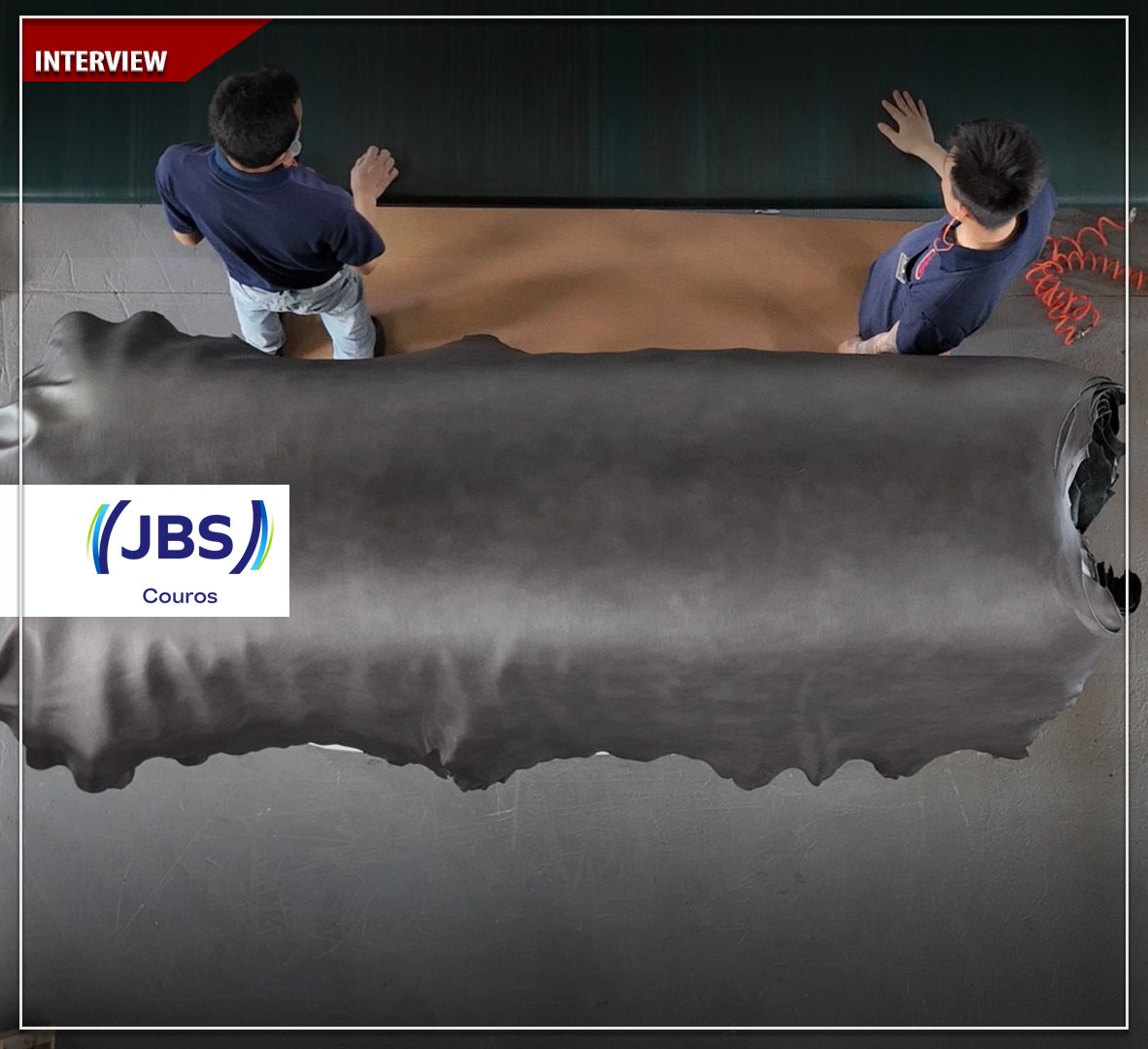
We produce and sell leather at different stages, from commodities such as Wet Blue and Wet White to fully finished leather. We serve the automotive, furniture, footwear and leather goods markets using multiple tanning technologies.
Our company is strongly focused on breaking sustainability paradigms through a data-driven approach. This enables us to support major brands in promoting transparency, ethical sourcing and circular economy practices throughout the leather supply chain.
With the introduction of the EU’s Ecodesign for Sustainable Products Regulation (ESPR) and growing concerns around sustainability, traceability and deforestation, how does JBS Couros address these issues?
These topics are central to our Kind Leather strategy. Our Kind Leather team continuously assesses future challenges, identifies the main environmental impact sources across our value chains and develops action plans accordingly.
Although bovine leather is unquestionably a by-product of the beef industry, we cannot delegate responsibility. As supply-chain actors, we have a duty to collaborate with the beef sector and civil society. Our approach is twofold: implementing company-level solutions such as supply-chain mapping and hide traceability, while also engaging in pre-competitive working groups to drive collective action.
As part of one of the world’s leading meat groups, what innovations is JBS Couros introducing in leather processing?
Last year, our Kind Leather platform introduced RTC – Responsible Tannery Chemistry, a chemical management protocol designed to reduce the environmental impact of chemicals through clear metrics and informed decision-making in collaboration with our chemical suppliers.
We have also implemented impactful process innovations such as SAVETAN, a tanning technology that reduces chemical use, water consumption and processing time without compromising quality. In parallel, we are deploying advanced AI-based systems to improve hide sorting and unlock additional value across the supply chain.
Could you describe your regional and global supply-chain structure?
JBS Couros operates within a truly global supply chain. Our hides originate from South America, North America and Europe, while our processing units and distribution centres are strategically located to efficiently serve Asia, Europe and the Americas.
This global footprint ensures optimized logistics, consistent quality standards and fast adaptation to regional market needs, allowing us to supply globally while maintaining local inventories.
What are your roles within organizations such as IULTCS and Leather Naturally, and how do you contribute to sustainability?
I strongly believe in the power of collective action. Promoting leather’s value and responsibility requires unified efforts beyond individual companies.
Within IULTCS, I currently serve as Chair of the Sustainability Commission, reflecting the organization’s strong focus on sustainability. At Leather Naturally, I previously served on the Management Board and contributed to projects such as the Life Cycle Assessment update within the Higg Materials Sustainability Index. Today, I remain actively involved as a volunteer, contributing to technical publications such as the LCA Guide launched in 2025.
Do you participate in international fairs and global industry events?
Yes. Given our global network of suppliers, customers and partners, I regularly engage with different cultures and regions. JBS Couros participates in major trade fairs such as APLF, IILF, ACLE and Lineapelle, and I usually attend those with a strong sustainability focus. These events are invaluable for learning, networking and staying aligned with emerging challenges and opportunities.
What is your perspective on artificial intelligence and technology in the leather industry?
Like any disruptive technology, AI can generate uncertainty. However, it also offers tremendous opportunities. In materials and leather applications, AI can enable smarter supply-chain decisions, optimized processes, improved leather selection and more efficient hide trimming.
At the product level, it opens new possibilities for customization and bespoke finishes. These developments underline the importance of research and sector-wide collaboration as we navigate this generational paradigm shift.
What message would you like to share with the leather industry regarding vegan, petrochemical-based alternatives?
Leather has unique and clearly defined strengths. While alternative materials continue to improve, competition should be viewed positively. It sharpens our focus, accelerates innovation and encourages continuous improvement.
Rather than concentrating on the weaknesses of others, we should emphasize leather’s benefits and sustainability credentials. Competition has also fostered stronger collaboration within the sector, although more collective work is still needed.