


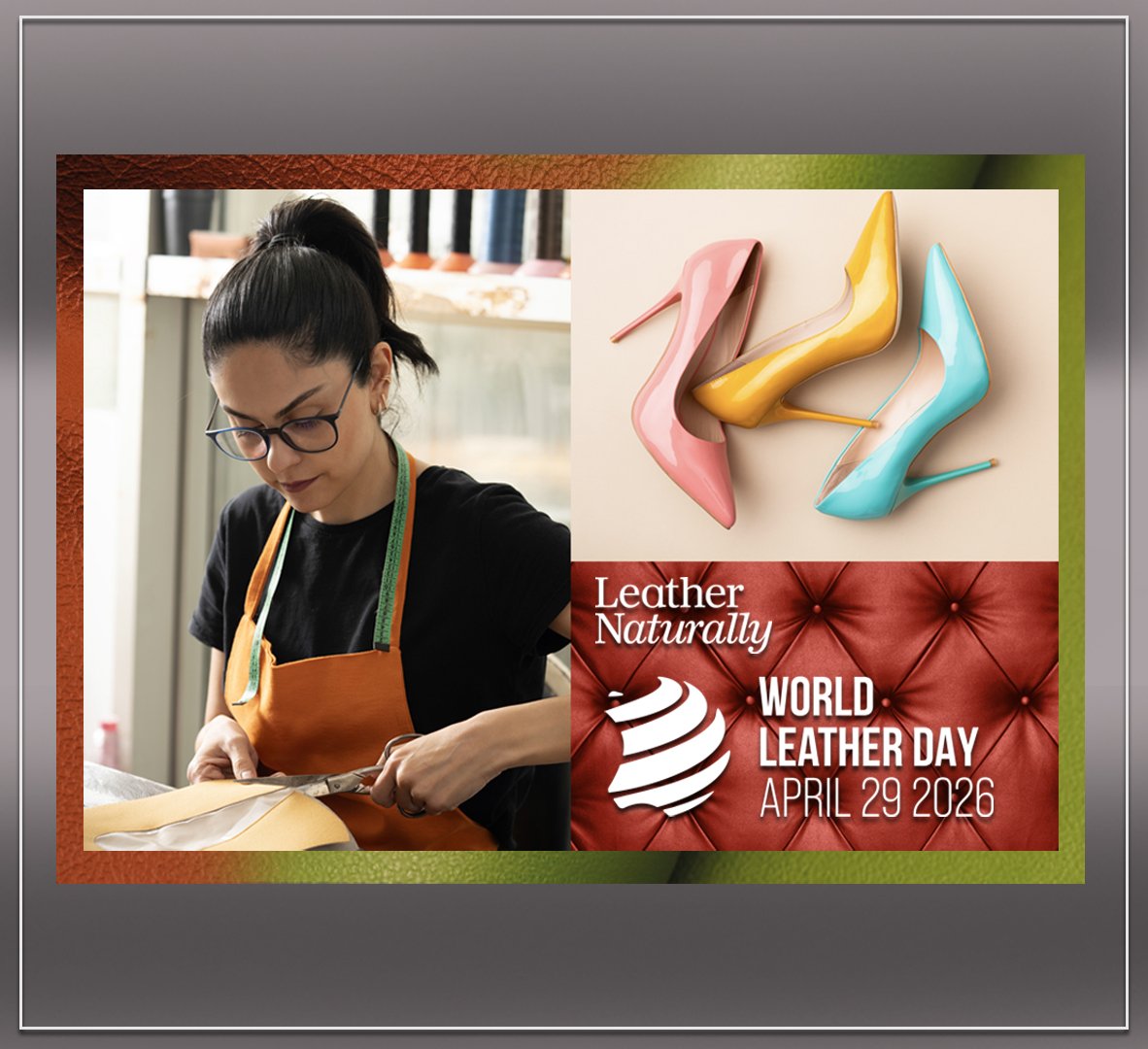
The global leather industry is preparing for World Leather Day 2026 with a strong and forward-looking message. This year’s theme, “Make It Leather,” calls for a shift from volume-driven production to value-driven consumption, highlighting durability, craftsmanship and responsible material choices.
The campaign reflects a broader transformation within the leather sector, reinforcing its role in sustainability and circular economy models. According to recent data shared by Leather Naturally, leather is not only a premium material but also a responsible one with long-term environmental value.
Leather production transforms a by-product of the food industry into a valuable material, preventing millions of tonnes of waste from going to landfill. Each year, over 270 million hides are recycled into leather.

Key characteristics of leather include:
- Long lifespan, reducing consumption
- Easy repairability, extending product life
- Ability to biodegrade at end-of-life (10–50 years)
This positions leather at the core of the “buy less, buy better” philosophy.
Recycling and Value Creation
Leather is also a highly versatile material in terms of reuse and recycling. Production offcuts can be transformed into:
- Footwear components such as insoles
- Composite materials
- Interior and decorative applications
Even at the end of its lifecycle, leather can be repurposed into new products, extending its usability and reducing waste.
Rethinking Sustainability Perceptions
Leather Naturally’s fact-based approach also addresses common misconceptions:
- Leather is a by-product, not the primary driver of livestock farming
- Its carbon footprint is relatively low when assessed across its full lifecycle
- It does not generate microplastics and is biodegradable
These insights are reshaping the debate around leather versus synthetic alternatives.
Alongside World Leather Day, Leather Naturally has launched a redesigned website featuring:
- A cleaner and more intuitive user experience
- Updated educational resources and fact sheets
- Enhanced transparency around leather’s environmental profile
In 2026, leather is no longer positioned solely as a material, but as a strategic component of sustainable and circular systems.
The “Make It Leather” campaign stands out as a clear manifesto for a future built on quality, longevity and responsible consumption.