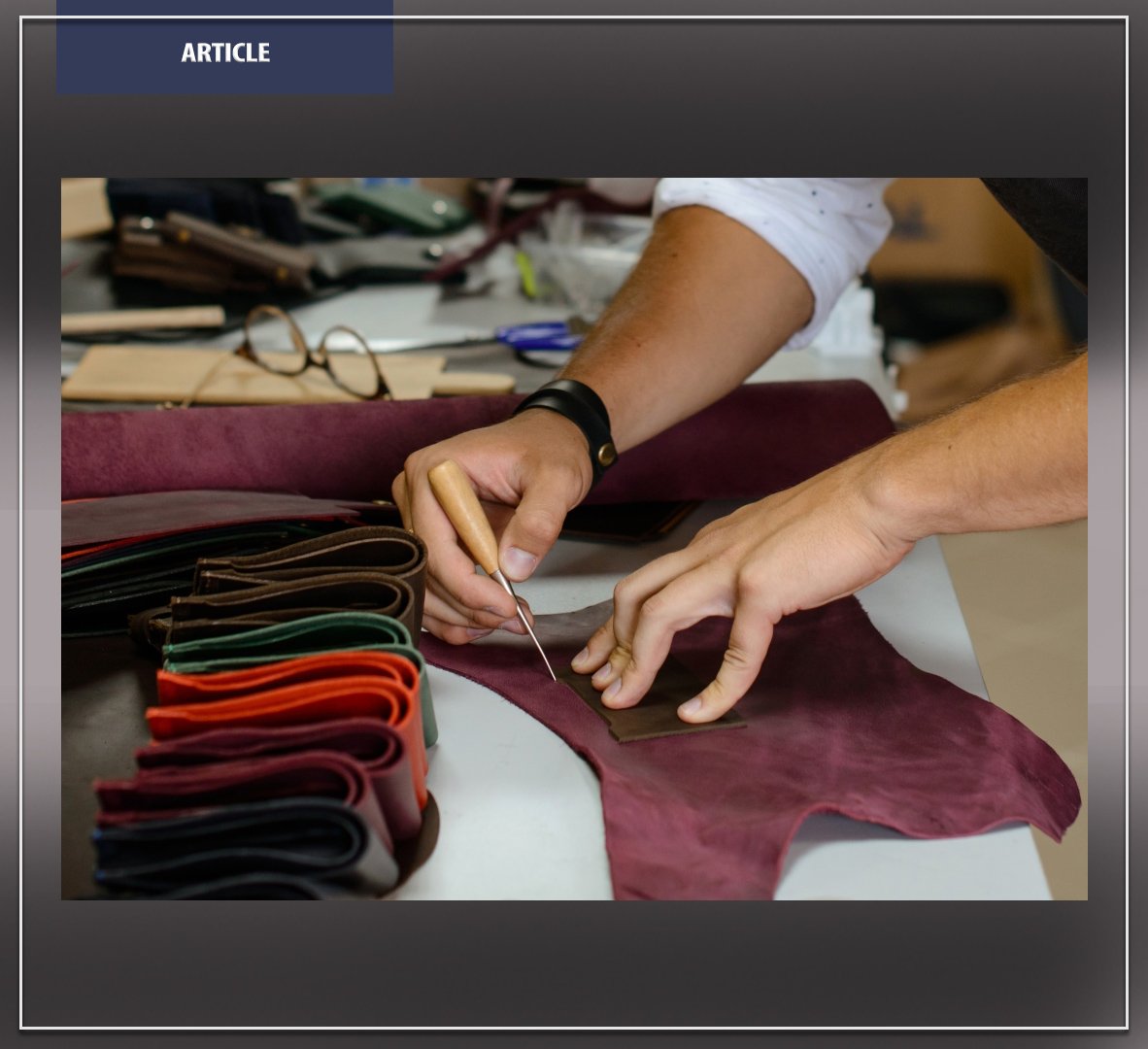



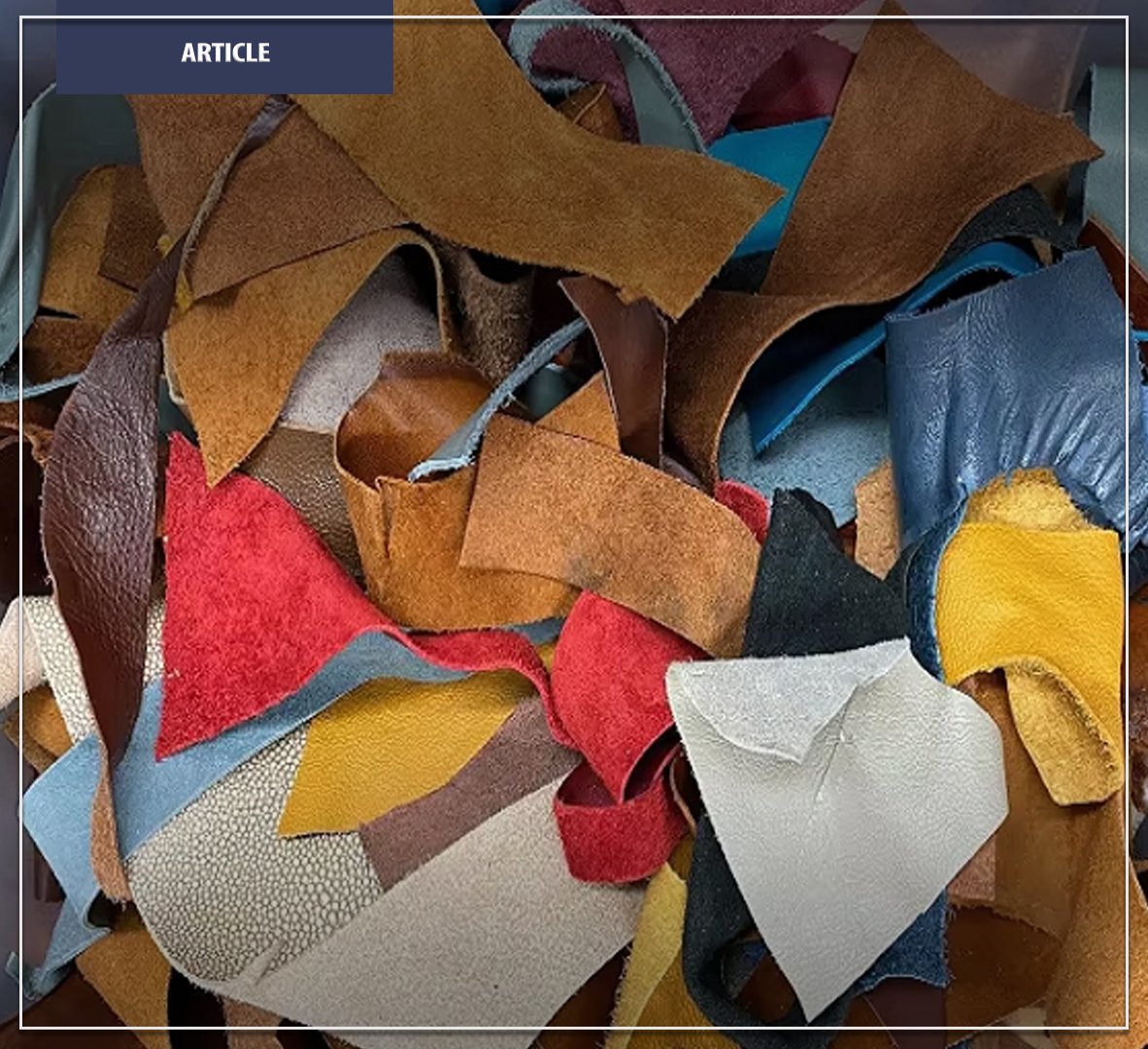
Leather garment production creates high value-added products while inevitably generating waste. Cutting scraps, edge pieces, defective items, finishing residues and packaging waste are common elements across all production models, from small workshops to industrial factories. Today, the decisive difference within the sector lies in how this waste is managed and what value it can be transformed into.
As of 2025, the key differentiator is no longer merely how waste is handled, but how it is measured, reported and made traceable in compliance with EU regulations. At this point, ESPR makes material efficiency and waste reduction mandatory criteria already at the design stage. The amount of waste generated throughout a product’s life cycle, how this waste is reused or disposed of, is no longer an internal audit issue alone but has become a market access requirement.
A Strategic Approach to Waste Management: Not Reactive, but Verifiable
The current EU approach defines waste management not as a reactive practice, but as a data-driven, measurable and digitally traceable production discipline. Pattern nesting software, digital cutting systems and batch-based quality control applications help reduce waste before it is even generated.


These practices form the data backbone of the Digital Product Passport (DPP). The amount of leather used, cutting waste generated, reused components and waste directed to recycling can all be translated into concrete indicators within the product passport. As a result, waste management ceases to be an abstract sustainability claim and becomes verifiable production data.
Types and Sources of Waste in Leather Garment Production
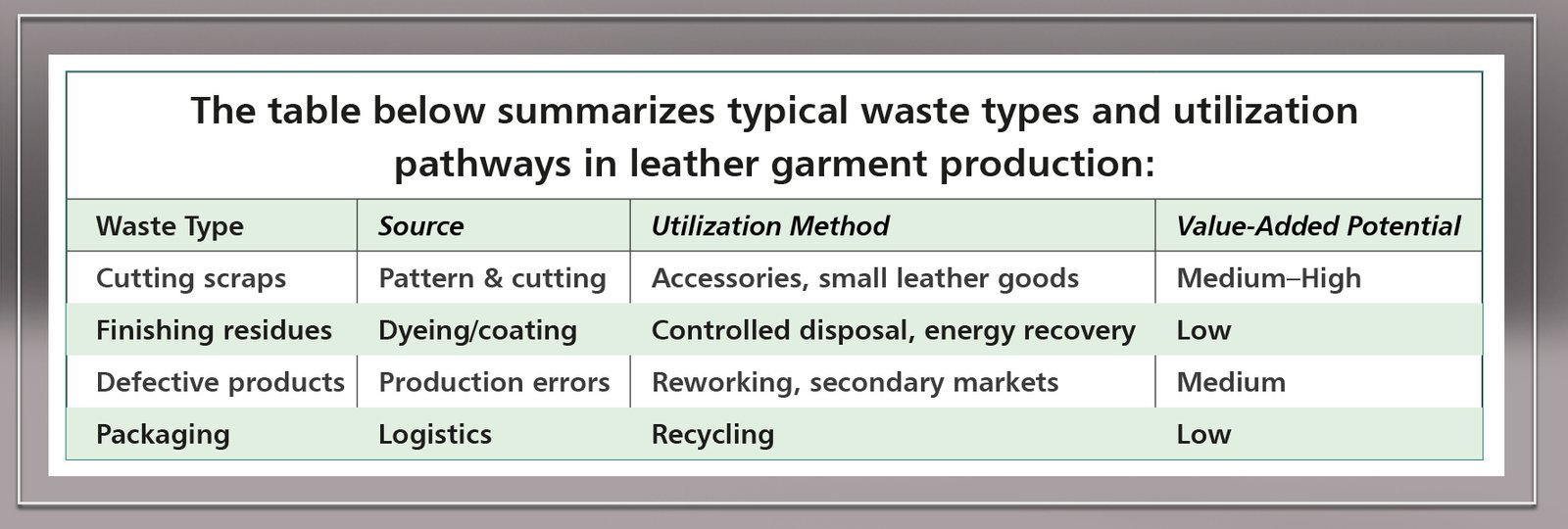
The first step in waste management is accurate identification. In leather garment production, waste is generally grouped into three categories: pre-production, production process and post-production waste. The largest volume typically comes from cutting scraps. Poor nesting plans, insufficient pattern optimization and low-quality raw hides can push scrap rates up to 15–30%. When chemical finishing waste, solvent residues and auxiliary material packaging are added, the environmental impact increases exponentially.
Revalorization of Leather Waste
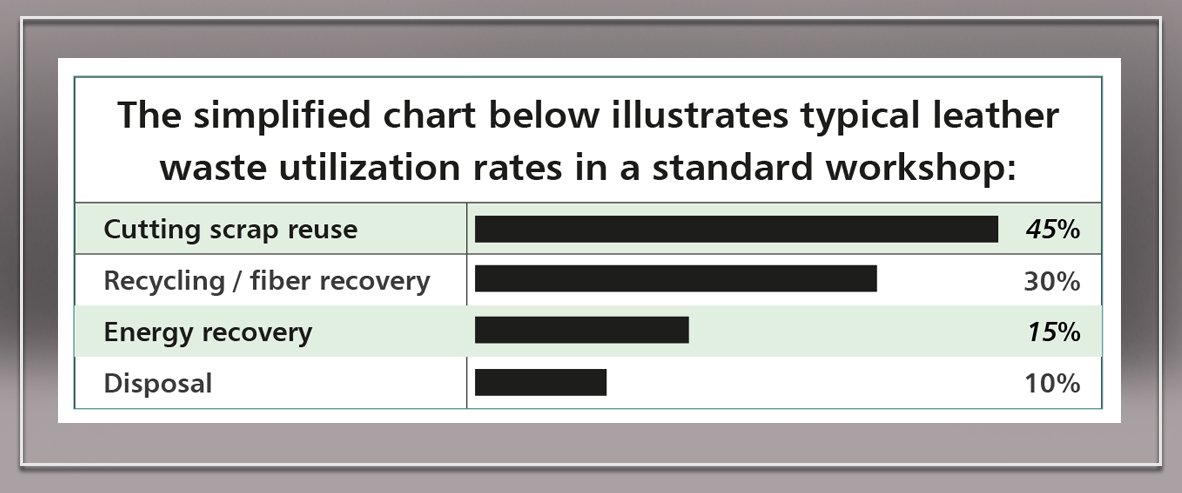
Cutting scraps and edge pieces carry significant economic potential when properly separated. Patchwork leather garments, small accessories, labels and sample production are among the most common applications. At a more advanced level, fiber-based leather recycling technologies enable the production of composite boards, insole materials and industrial surfaces.
This approach directly aligns with ESPR’s circularity principles while also allowing the documentation of second and third life potentials under the DPP framework.
EUDR Perspective: Waste Management and Supply Chain Trust
EUDR does not directly regulate leather waste, but focuses on raw material origin and deforestation risk. However, for leather garment manufacturers, its indirect impact is significant. As traceability of raw hides increases, scrap rates and waste volumes become more visible. High waste levels are increasingly perceived as indicators of inefficiency and risk within the supply chain.
For this reason, waste management emerges not only as an environmental issue, but also as a marker of supply chain reliability.
Regulations and Market Pressure
European brands and global buyers now demand not only price and lead times, but also measurable waste management data from their suppliers. Waste reduction targets, traceability and reporting standards function as a new “entry ticket,” particularly for export-oriented leather garment manufacturers. This pressure is pushing even small workshops toward more disciplined production models.
Waste Is Not a Burden, but a Design Input
For leather garment workshops and factories, waste management is no longer a clean-up activity at the end of production. It has become an integral part of design, planning and reporting processes. Companies that manage their waste effectively can reduce costs while substantiating compliance with EUDR, ESPR and DPP through concrete data.
Most importantly, when properly managed, leather waste ceases to be an environmental problem and becomes the raw material for new products and new business models aligned with EU regulations.